I must mention to you (some of you yet again!) that I have brushed arms and shared beers with guys who I suspect as being some type of spies..like CIA agents or NSA agents or Vietnam’s TC2 agents. It’s no big deal. I am probably imagining things as usual. But when you get off a plane in Saigon some day and a robust and buffed man walks up and greets you by name, and you’ve never seen him before, and you were expecting no one, and he remains with you every day on every subsequent trip you take into Vietnam, and he meets your plane each time you come in even though you’ve told no one, and he even goes with you, your wife and older sister when you are going on vacation to the beach or the mountain resorts, you begin to think to yourself..hmmm.
I mean and they’ll never admit it. A nice fellow, who played an interesting (to me and my family) role in my life, who has the Instagram handle of Angry Logger, and makes exquisite natural wood furniture, yet flies all over doing something he doesn’t really explain, is an expert photographer, and has spent lots of time in backwater countries, responds to your question “Are you some type of spy”? retorts..”Haha, NO …..but then that’s what I’d say right”?,,. I mean it keeps you thinking.
The CIA recruited one of my international team at Intel, who went to the PRC with me several times in 1984 and 85, to write down and get the business cards of everyone we met and turn them in with a debriefing. Bill Langner is his name and we had gone to China together several times before he mentioned his role to me. One day, about a year into our new relationship with China I had a senior “technologist”, a woman, from Beijing in to visit with us. Bill came into my office and said: “ Jeez Gerry, I just got a call from “Roger Roper” at the (shhh) CIA and he’s pretty upset and excited. He wants to know what the hell we’re doing having (Madame) Yao BangLi (made up name) visit here next week. You know she is the top woman General in the People’s Liberation Army and on the Army General Staff”. Oh well – things like this always seem to be happening.
I actually think I am just playing; doing recreational mental summersaults since I like to get dizzy…. Anyway this is not a story about spies. This is a story about how impressive the internet is and about how a guy named Darrell Owens did the best job EVER explaining and impressing upon Margo and me just how amazing it is. The internet is the work of man – harnessing the most uniquely magical forces and elements we humans have yet to figure out. There have been billions of man hours spent figuring out how to do what the internet does..it goes back to Ben Franklin and Faraday and Marconi and Morse and hosts of people whose names are unfamiliar to we who use it. Perhaps the most unsung are Maurer, Keck, Schultz, and Kao who made fibre optic cables possible and harnessed the speed of light: Patent # 3711262.
I have traveled with Darrell to a number of countries: Vietnam, Ghana, Zambia, other Third World places. Darrell knows as much about the communications infrastructure of emerging countries through out the globe as any man alive. He was current 10 years ago but now he’s retired. He told me once he was locked up in a tin-sheet jail far out in the boondocks of the Congo near Kinsangani or Mbuji-Myal or Kindu or someplace like that – real shitholes. He had been mapping the infrastructure of the phone network. In a continuously heaving country like the DRC, situated with borders on 9 countries, 11th most populous country in the world, and between 5-10 Million citizens killed in civil wars and civil strife just in the last 25 years, you’d want to know what the infrastructure looked like if you had to intervene. The local warlord didn’t like the idea but never-the-less let Darrell go.
In any case Darrell knows how the network infrastructures around the world work. He and I met up at an conference in Livingston, Zambia back in about 2009; I was a keynote speaker and Darryl was leading a workshop. Margo had accompanied me which was not typical for my business trips but she was interested in schools and arts in Third World countries and had done programs in Cambodia, Southern China and Singapore and met with school children all throughout India and Vietnam.
Sun City Resort sits right next to the most beautiful waterfall in all Africa and most say the World – the grand Victoria Falls. Zebra’s munch the grass outside the rooms, walking freely through the beautiful grounds. In 3 minutes you can walk through the forest from your room to the Zambian side falls overlook, standing in the mists and the mighty roar. Locally they are called “Mosi-oa-Tunya” – The Smoke that Thunders!
“MOSI-OA-TUNYA”
VICTORIA FALLS
We worked on plans and strategies for bringing more broadband networks to Sub Saharan Africa, meeting with other players and presenting our corporate programs. We went out to some of the schools and met with the kids and teachers.
BOAT RIDE
One evening we took a small aluminum boat on to the “The Mighty Zambezi” river and went out through the many islands looking for game. The boat driver steered the 20 foot runabout right up to the mud bank as we stared up to a 10 fool tall Elephant bull staring down at us- his trunk could touch us.
Margo, Darrell and I were sitting by the pool at lunch a day or so into the conference when Darrell astounded us with the following discussion.
THE POOL AT SUN CITY ZAMBIA
We were sitting there sending a couple of email messages with some information to each other. Just a simple exchange. Margo commented that it’s nice that we could do email in the middle of southern Africa. Darrell said something to the effect that “well these messages have to go all the way to London and back to get to each of us”. Holy lightbulbs! That was very strange.
D. said: “Well here, in sub-saharan Africa, they haven’t yet built the hierarchy of servers to do all the message exchanges for people whose “domains” are outside the local countries”. Hmmm. (remember the domain server is the one that hosts your email like @gmail.com” – that’s the domain.) Turns out, he told us, the email message actually has to go through a lot of places and networks to get to each other. Even though there will only be a few seconds – maybe 5 to 10 between Gerry sending it and Darrell receiving it. In fact he says “ Why, it has to go all the way to London”!!
Well this sounded interesting, and we had a captive expert with not much else to do in that lunch hour by the Sun City Zambia pool.
So after some urging he decided to tell us the answer to the supposedly simple question “When Gerry sitting by the pool, sends an email message to Darrell, over on the other side of Margo, sitting 6 feet away, where does that Gerry Email message go”? Here is (more or less) what Darrell told us: (Swopian-presnivel: today it doesn’t work like this…servers now installed in Zambia, close to the Sun City, can do it..BUT in 2008 this is how it worked)
Ok first you should know that, in some cases, in fact in the longest “legs” of the journey, which are under the Atlantic Ocean along the West African sea coast, the message is traveling at the SPEED OF LIGHT! Which is very fast indeed. Light travels 186,000 miles in just one second. That means a light message can travel a distance “in one second equal to flying around the circumference of the earth more than SEVEN times”. So that email, that I am sending to Darrell sitting 6 feet from me by the pool in Zambia has to go to London, England and back to get to him.AND: It does! IN LESS THAN 10 SECOND – IN FACT MORE LIKE 2 SECOND! Now ask yourself how does it get to that very fast cable, under the Atlantic Ocean, which starts 1,400 miles south of us in Capetown, South Africa, up to London, and back to us at the hotel? HERE is how the message travels (more or less):
1. from our laptop by the pool it goes up to the hotel roof where there is a WiFi router – just like at home
2. then the message goes a foot by a small cable to a Microwave dish antenna on the hotel roof
3. then it goes by a Microwave signal 15 miles through the air to the Livingston Post office
4. then by a copper cable to the town of Kasungu, Zambia
5. By Microwave across the Zambezi River to the town of Kasane, in Botswana (by Chobe Game Reserve)
6. by Fiber Optic Cable (“Fiber”) to the capital of Botswana, Gabarone
7. By copper cable to Johannesburg (JoBurg) South Africa
8. By Fiber down to Capetown where it intersected, in 2008, the SAT-3 Undersea Fiber Optic Cable
9. Then by the Fiber SAT-3 8000 miles to Senegal and on to Sesimbra, Portugal.
10. At Portugal it switches to another undersea cable to Brean or Goonhilly, England
11. then on to London where Gerry’s message essentially says: “How do I get to Darrell Owens”.
So it lines up and then gets smartly processed by an enormous pile of enormous “masses” of FLOPS which, “said mass” figures out where Darryl’s notebook is.If “said mass” were sentient it would say something like: “Oh Me Gosh – Darryl’s pretty much sitting right next to Gerry” In fact the “mass” can pretty much figure out where anyone is who happens to be connected to a mail server anywhere in a fraction of a second.
So there is my email sitting in London.
THEN the “mass” takes the message and, wouldn’t you know, sends it back: London to Bream
to Sisimbrato
to Senegal
and then Capetown
to JoBurg
to Gabarone
to Kasane
to Kasungato
to Livingstone Post Office
to the Sun City Hotel roof
down through the WiFi Ether
and in less than 5-10 seconds tells Darrell: “You Got Mail” from Gerry Greeve
So That’s about the end of my tale.
My email went close to 10,000 miles each way – 20,000 miles in 5 seconds. Down to CapeTown up to London and back again.It went the largest distance under the Atlantic via the SAT-3 Fiber Optic Cable about 8000 mile each way. In that portion it traveled pretty close to the speed of light.
Also those of you who like to get a little bit geeky understand that all along the way that email signal is processed through innumerable little machines, clusters of servers, parts of specialized computers and radio signal generators, ampifiers, and receivers. The signal gets checked and re-amplified every 60-70 kilometers under the sea, that’s about every 40 miles. So there are about 400 machines that touch the signal just under the sea. Each signal has code to make sure it is being transmitted and passed on accurately and unchanged. And to fix it if it gets tangled up. It’s normal for the message to be split into little parts, sent over separate stands of fiber and then reassembled – dozens or hundreds of times. I am sure there are another couple of hundred machines massaging the message as it passes through all the nodes on land. The message probably gets touched by several thousand electronic digital and analog devices. A ton of stuff going on in those 5-10 seconds.
By the way, man’s use of undersea cables to transmit electric messages goes back quite a ways. On 27 December 1879, South Africa was directly connected with Europe via Durban and Zanzibar to Aden by means of the East Coast cable of the South African Telegraph Company. This was a single-channel cable. The first undersea cable was a Trans-Atlantic one from Ireland to Newfoundland in 1850, well before the American Civil War. But it took another 15 year to get a reliable one operating but when it did it cut the time to pass a message from Europe to the New World “from two weeks to two minutes”.
Now it is two seconds!
By the way the pictures in this post are from Darrell. Thank you my friend for all you’ve taught me as well as a number of very interesting excursions.
In August 1968, my roommate from Santa Clara University, Pete Borelli and I drove a “car delivery” new 1967 Mustang convertible from Market Street in San Francisco to Columbus Circle in Manhattan. That was the beginning of a 15 month adventure in Europe that almost ended with a stolen pack in North Africa. That stolen pack was a stroke of good fortune that drove me into hanging out in Spain for another 8 months grabbing bit parts in movies. It happened like this.
Gerry and Pete sometime in the late Sixties
When working odd jobs on Gibraltar in January and February of 1969, I had heard that they needed “American looking” extras and bit part players in a World War II movie being made up the coast, eastward about 100 miles. The film was to be about a famous tank commanding General and his battles in North Africa and Germany. The bit parts would be for close ups of General Patton’s troopers. And when Lou Branson showed up on that Monday on The Rock looking for fun we quickly decided to head east up the Costa Del Sol to see what was up. Little did we know that we were headed for interesting days in the making of the 1970 Academy Award winner of seven “Best’s” including “Best Picture, Director, and Actor”.
We stopped for two nights in Granada to hear some Flamenco music and watch the dance, drop by the Alhambra, and switched trains toward Almeria. The train took its rambling path around the twisted edges of the Sierra Madre. Evening darkened the hills when we stopped in the mountain town of Guadix and then continued on. The llght seeped away as we ran further and further into the heart of Andalusia. Rough, dry, scrabbled mountains – asleep since Noah, then the Romans, and then the Moors carved out a desert life among the stone and dust.
By ten or eleven we reached Almeria and in an exhausted state of mind wandered out of the small shack of a station. The few travelers who had been on the train quickly went their ways and we found ourselves by ourselves. The deserted streets stretched out as we walked alone through the silent buildings. The dark reached out towards us from behind the side lanes, single bulb light poles the only population. Lou and I looked for some sign of life – emptyness surrounded us. We came onto a roundabout with five or six streets intersecting. Several cafes showed signs of life. After a quick look around we found a small pension with a large room, two beds, and windows on the street. Well this was it..the place where they were making this war movie. The place where we hoped to get some work as American soldiers in World War 2. The place where we were to encounter the fascinating history of George F. Patton, Five Star General and a man of myth and legend.
Our pension was on the Rambla Obera, a half a block from the roundabout called Puerta de Purchena. It was actually more like a square with wide sidewalks and walking streets debouching into the area. Like many Mediterranean towns this one had the custom of the evening walk before the late dinner. More precisely it is a leisurely stroll. It is called the Paseo in Spanish and La Passeggiata in Italian. I am sure it has a nickname in Croatia and Greece and probably has been adopted today in all the countries bordering the sea. It is a lovely time..the heat of the day has broken, the girls go arm in arm in groups up to eight, watched carefully by their older women relatives who walk a number of paces behind. The men stop to talk and smoke cigars or step into a sidewalk bar for a small vermouth. Funny enough, the street where they walked each day was called Paseo de Almeria. The walk would start down near my old house by the sea at the Plaza de las Velas (The Candles) and then casually up the hill to the turn around at the Puerta de Purchena.
“Turn arounds”, being what they are, present an opportunity for all strolling to slow way down. So just before eight PM struck on the town church-bells the Puerta was the crowded center of the town’s life for a half hour or so. In the sixties Spain was more a country of the 19th Century than the mid 20th. It was an old fashioned place with the ancient “courtly” traditions – all the months I lived there none of us guys ever had even a conversation with one of the beautiful, young Spanish ladies who walked with their chaperones each evening on El Paseo de Almeria.
Towards late morning, after the long train ride from Granada and a good night sleep, Lou and I walked over to Puerta de Purchena and found a sidewalk cafe for Cafe con Leche. As we walked in we heard a few guys speaking english and made eye contact, giving a nod in their direction. After a short while we began to talk over the nearby tables. There were two light colored guys and a latin looking fellow with long black hair. One guy with a mustache, hair over his ears and a dusty complexion took the lead. His name was Neil and he gave us the beginninng of our basic training in being a movie extra. He told us there were a few dozens expat, 20-something year old guys and girls who had trickled into town for the jobs. The folks who had gathered here included Americans, Brits, Australians, Argentinians, and Canadians. If you had a reasonably fair complexion you would be welcomed at Estudio Espania. That was the studio that ran the nuts and bolts for the big production companies like Sergio Leoni or David Lean. There you might find out when the next casting call would happen. That in turn would result in the morning line up and possible selection by the casting manager for that month’s spaghetti western “extras”.
The great good news for Lou and I was that there was a casting call for “Patton” coming up. If we went to the entrance of the biggest, most luxurious hotel in town, The Gran Hotel Almeria, every morning around 7 am there would be a man from the studio who would tell the gathered hopefuls when and where to show up. That seemed a bit of a strange way to run the show but there was a reason. Most movie shoots start in the early morning light. It gives dramatic shadows and clear air. Often time the cast has to be on the distant set by 7 am – that is made up in costume and ready to shoot. So 4 am wake up calls were very common. In fact by 8 am the most of the crew would be gone from the hotel. Last to go were the senior producers; they needed to be there for the shoot but not the hours of setting up camera, lighting, sound, special effects, etc, etc. Since casting was no longer needed to babysit the cast and crew they could begin their day jobs – finding us!
WHERE TO MAKE A MOVIE
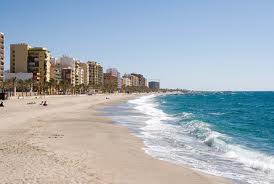
So besides on the edge of the Costa Del Sol, where were Lou and I? Almeria sits on a beautiful bay on the southern Mediterranean coast of Spain, a day’s hitchhike on a winding, cliffhanging road east of Malaga. It looks out south across the Med to Africa – Algeria and Morocco – the Sahara – and beyond. To the west is a point called Aguadulce, “Sweet Water”. To the east is Cabo de Gata – Cape of the She Cat. Cabo de Gato marks the end of the Alboran Sea, a unique section of the Med full of porpoise, dolphin, and sea turtles – an ancient and biorich salt water stew mixed of Atlantic Ocean and Mediterranean sea life running from Gibraltar to Almeria.
Almeria
This is the driest place in Spain – it is a true desert – dirt, empty arroyos, rock cliffs, valleys filled with foot deep masses of sharp, flat, slate chip gravel that tears your shoes. It is stinkin’ hot from April to September. In winter there are occasional wetlands with meagre creeks..if you walk out them there are small fields with bulls being raised for the Corrida Toro – it they get loose they will try to kill you. The dirt is sometimes white, the dirt is sometimes sand, the dirt is sometimes clods of hard clay..the dirt is everywhere. But the sky’s are big and the air is clear when dust devils aren’t at work. If you found yourself dropped there blindfolded and you took the mask off and someone said “you’re in New Mexico, or West Texas or three days horseback ride southwest of Juarez” you’d believe them. It is a spitting image of the America west desert country made famous in numerous John Ford, Glenn Ford, John Wayne, Delmer Daves, Gary Cooper, Alan Ladd, George Stevens movies.
The landscape is one of the reasons that in 1963 and 1964 Sergio Leone decided to film a large part of A Fistful of Dollars in the desert around Almeria. He had started work back in the early ’50’s in assistant director roles in “sword and sandal” movies including Quo Vadis with Robert Taylor and Deborah Kerr and Ben Hur with Charlton Heston – all shot in desert like surround. In Leone’s first credited Director role, The Colossus of Rhodes, he filmed in numerous locations in northern and central Spain. Almeria had been chosen as the dry Mediterranean setting for a number of blockbusters including King of Kings, El Cid (with Sophia Loren), Lawrence of Arabia, and Cleopatra (Elizabeth Taylor) among others.
Of course with big Hollywood productions, and lots of movies every year, the infrastructure needed to support all aspects of filming, from food and transportation, to sound and light equipment, was all developed to a world class level. Fred Koenekamp the Patton Directory of Photography and Academy Award winning Cinematographer said of the local team: ”The Spanish crew was really quite excellent, they are truly amazing people.” Technical staff, development, banking, casting, sets & location were all available with “Estudios Espania”, the Spanish Government film studio, being the central hub. In 1966 alone, nineteen films were released which had been at least partially shot in Almeria and in 1967 twenty five more. But of course it took Leone’s “Man with No Name Trilogy”, to put Andalusia on the map for casual movie buffs.
Lee Van Cleef – classic bad guy in the ’60’s
It is held that the “new” Spaghetti Western was successful because the traditional American cowboy film had ossified into a ritualistic morality play where good guys wore white hats and bad guys black. With cookie cutter plots and personalities, the moral tugs were expected and well known. After all it had been over a decade since High Noon and Shane, arguable the best ever, had been made. Only one great western, The Searchers, had been made in that decade and it was eight years before. Instead Ricky Nelson and Dean Martin, the balladeers, and Rock Hudson, the cover boy, were the draws. The new films coming out of Italy and Spain were driven by low budgets that coated the final product with a roughness matching the characters of the heroes and villians. With double crosses and back shooting galore, the plots could go anywhere. And the hero had no righteous background or romance to soften his story. Craggy faced, unshaven, deep creases like scars – mean looking. Leone filmed the three Clint Eastwood movies in 1964,1965,and 1966 and they were released in the US starting in 1967. When Lou and I arrived in early March 1968 the filming of Once Upon a Time in the West had just finished with Henry Fonda and Charles Bronson playing the heavies.
It was clear from looking at some of the better known films that had been partially filmed in the surrounding desert, that Almeria had appeal for much more than westerns only. The two other big themes in the mid Sixties were war, (How I Won the War, Tobruk, The Rat Patrol, Lost Command, Commandos), and crime, (The Cats, They Came to Rob Las Vegas). So given that General Patton’s first big battle success was in North Africa and then again in Sicily, both places where the terrain was identical to the deserts and mountains around Almeria, it was a no brainer to film in Almeria. And snow covered mountains towards northern Spain served nicely for Belgium and Germany which put the icing on the location cake.
HOBO’S OF THE WORLD
Louie and I stayed in the pension on the Rambla Obera for a couple of weeks. It was in a lonely deserted part of towns. Amphetamine was legal in Spain at the time and I’d pop some pills and pull all nighters reading Strindberg. The first few weeks in town were pretty slow, getting to know the other foreigners and looking for girls. Neil was typical of the guys hanging out hustling for jobs on the movies as they passed through. He and another American cat had worked on two cowboy movies in the last year. Four Rode Out with Leslie Nielsen, Pernell Roberts, and Sue Lyons and most recently Once Upon a Time in the West with Henry Fonda & Claudia Cardinale. He had not yet gotten a job on Patton but then the filming had just started. During the period Lou and I were in Almeria I recall about a dozen people who were working. The jobs went from dead soldiers to armed guards, so there was no talent required..just a look. Most of the guys were in their 20’s. The oldest fellow was about 40 – he was from Eastern Europe and was a professional deep sea diver. He had hurt his ears diving on oil rigs off West Africa and was just trying to survive. He had dark complexion but didn’t look Spanish. Another guy was an American named Ron..he was on disability and seemed financially comfortable – he had his wife and young daughter along and rented a house down the coast about an hours walk. Two american hipster guys blew in a week or so after Lou and I arrived. They had a guitar with them and would stay up nights taking acid and writing songs. The tall dark guy we met the first morning was Tony, the Argentinian. He was handsome and tall. Totally outgoing and friendly, in fact everyone was cool and in the lingo of Sixties San Francisco “heads.
In early March a couple showed up in town and checked into the Pension Oriental. They were Israeli’s in later 20’s. While he had dark skin and black hair, he also was tall, so he had gotten a role in the British pipe and drum band. There were no roles for girls. We’d often eat lunch in our rooms and once they asked me to join them. She said “we’ve bought some gobbledegook” … I asked what did you get? “gobbledegook – we got some gobbledegook” … I said “I don’t understand; what is that?” … “goobledegook! you know..you call it horse!!” Oh my goodness. The Israeli’s were asking me to join them in an afternoon lunch of horsemeat. Of course, being American, I had never considered eating, let alone eaten horse. But, I enjoyed the Israelis’s; they talked a lot and were lively. So I was leaning towards joining them, then thought – well how are they going to cook it? We did not have kitchen rights, but, I knew they had a small burner and used it sometimes. So I asked ‘em. “Oh we don’t cook it..we eat it raw!” NO WAY. I sat around and watched them prepare it the way “we do it at home”. They offered a taste but I politely declined. The man as I said loved to talk; he was the king of the “big dream”. We’d all meet up unplanned and unscheduled at any one of the sidewalk cafes or bars and we’d talk about where we were and the chances of getting roles. After any new news had been jawed to death our Israeli would start talking about how people he’d met had made millions..and within 5 or ten minutes he’d break into his copywrited aphorism: ”Think Boy’s! That’s all we have do do is Think! Think Boy’s – we can come up with an idea that will make us milliions – all we have to do is think”! He’d lecture us time after time and we laughed and laughed.
Encarna and me grabbing an evening smoke
Encarna was another person in town. She was part gypsy, maybe all gypsy. She lived in a small but lovely room on the roof of the Pension Oriental. We’d go up there in the evening to cool off and have a smoke. She’d sit there with us, even though she spoke no english, just soaking up together the warm star filled night. She was the cleaning gal for the guest rooms. She did the laundry for them as well – there wasn’t much – sheets every week and towels. She offered to do mine as well. One period in May, after Patton was over and before Sledge started, I hadn’t worked for several weeks and was flat broke. She realized it and one morning she showed up about 11 with a can of sardines and a loaf of bread for me. I’d never eaten sardines before but they sure were good that one time. She did it again three or four days later. I’ve never eaten canned sardines since then but their memory is sweet.
One of the delights of this period was the amazingly low cost of life on these edges of civilization. I was living on a dollar a day or about 75 pesetas I break it down from memory as follows in pesetas per day:
Pensione Oriental – 25
cafe con leche y chocolate croissant – 5
International Herald Tribune – 5
sardines or ham and bread loaf for lunch – 15
dinner at the market cafe – 20
beer & tapas evening – 5
At that rate we could work one day as a dead soldier or Wild West bandito get paid $30 and we were set for a month.
We all loved to go to the market cafe for dinner. Five or six of us would show up at about eight and be greeted with gusto by the rather large owner. He handed around to each a ceramic jug filled with cold, tart white wine. Everyone took a long, deep pull, clearing the heat of the day in the cool shadows. As we were seated in the room, which had maybe ten tables, a basket of unsalted, rough bread and a dish of local olive oil were given the group. Then came a half chicken, plump and roasted to perfection – crisp skin and clear juice flowing, soaking the pile of french fried potatoes which slipped in their abundance off the edges of the white country plates . Dessert was a custard dish of flan with a slightly toasted crust on top. YUM! All for about 30 cents.
But I am getting ahead of my story. The fact that they were making a movie about Gen. Patton was lost on us. Heck I was an Army Brat raised in the history of World War II and I couldn’t tell you one thing about Patton. No one was interested in learning anything about him either. I had returned from a year in combat operations in Vietnam on the Cambodia border just over a year before. I’d done operations with the 1st Cav Division, The 4th Infantry Division, The Korean White Horse Division, had been to Thailand, Japan, a lot of Western Europe but I had no idea that Patton waged war in NOrth Africa, Sicily, France, Belgium, and Germany. But we knew one thing – we might be able to get work making a movie about him down in the depths of Andalusia.
CASTING CALL – PATTON
The word came out after Lou and I’d been in town about two weeks, late February or so, to show up at the Studio Espania, out towards the train station, at 9 o’clock Wednesday morning. A casting call for extras. A group of maybe 30 guys showed up; all the usual English speaking guys we’d been drinking with every evening, several new guys, and a bunch of locals. They had us line up outside on the dirt back lot. A Spanish exec named Eduardo walked out – he was head of casting for the Spanish State Studio. He told us there were 6 parts they were choosing for, 4 of them “one liners”. Lou and I got picked as did a guy named Ron who we had not seen much, a big American named Rich and his traveling buddy. The rest were sent home and we had a small meeting in the yard. Eduardo got all our names and pension names, told us our pay would be $100 a day and to expect one or maybe two days work. Said he’d get word to us when the next meeting would be. Then he lined us up and took a picture or two of each of us and that was it. Well we were happy guys, especially me who had no money to speak of.
A few days later the word came that the producer’s team had decided to hire an acting coach for us. Since none of us had ever done any thing like be in a movie this sounded like a good idea. But there was more..it was going to be at the Aguadulce Hotel which was where George C Scott and Karl Mauldin were staying so we might get lucky and see those guys AND we were going to get $20 a day, a free lunch, and beer! Livin’ the dream.
Our acting coach was a 30 year old experienced bit player from Hollywood. He was a nice guy – I can’t find him in the credits but his name was Robert and we called him Bob. He played a member of Patton’s staff with several scenes but no speaking role. He was however part of “the company” which meant he had been hired in Hollywood and was on a salary. If you were part of the company you were in a sweet spot..you made money even when you weren’tt working. So the producers told him to give us some training. At that point they assigned us our lines. Lou and I joined together where I had a head wound and was bandaged so I could barely see..I had my hand on Lou’s shoulder as he limped ahead on a crutch, leading me. I had the line “Take me home. Please take me home. Take me home. Please take me home”
When we got to the lesson at Aguadulce we all met by the pool then went into a room they’d rented. We started discussing our lines with Bob. He made sure we understood the context of the scenes. They were all taking place in the July 1943 Sicilian campaign where Patton was racing Montgomery to be the first to Messina. Once Messina was taken the Germans and Italian troops would have a difficult time rewinning the island and The Allies would have a convenient jumping off point to invade the peninsula. So it was the key to the initial invasion of Europe by the US and British. These scenes also helped flush out Patton’s personality and character. The whole movie develops significant creative tension around the question of his character. Is he a good general or a bad general? Clearly he wins battles but is it at too much of an expense of lives? The whole theme of the Sicilian part of the movie is to position him as somewhat reckless and careless in exposing his fighters to too much and/or unnecessary danger.
The friend of Rich was assigned “What silly son of a bitch is in charge of this operation”. Which is the line he says to Karl Mauldin when the two of them are crouched in a ditch foxhole during an artillery bombardment. Of course Mauldin is the CO and he gets a laugh when he answers “I don’t know but they ought to hang him”.
Ron and big Rich were assigned: Rich: “There goes old blood and guts” Ron: “ Yeah, our blood and his guts”
Ron, of “our blood and his guts” fame, was a mental epileptic and quite strange. I recall an evening I was at his house for dinner and, as we sat late into the night rapping, he caught moths and holding them careful by their wings, burned them to death in a candle – one at a time for almost an hour. One day he and I went swimming out at the Capo de Gato. He had lots of money it seemed. He rented a nice house on the cliffs above the Med south of town, had his wife and his daughter along. It was as if he was retired at 25. He had a VW Bug and as we sped along a dirt road kicking up dust and bouncing through the dry river beds and thorn bushes, I tried to listen to his story. He had been in government service of some type and had had a set of seizures that resulted in him being on government disability. That was how he could afford the splendor. He told me that he was a mental epileptic. Well I didn’t know what that meant so asked him what happened if he had a seizure. He said he could have one at any time and he’d start shaking uncontrollably and probably slip down under the steering wheel..all this as he drove like a maniac at twice a safe speed through the desert. As I pictured him having a fit and the Bug rolling over endlessly into the desert I said “Well, do you want me to drive”? Later we would tease him by begging him to “have a fit” while we were filming our bit parts and thereby push the shooting to a second day…but he nix’d our bright idea.
My part was very simple: four words said over and over. So I tried it out a half a dozen different ways, emphasizing each word more than the other three. Like this:
“ PLEASE take me home”
“Please TAKE me home”
“Please take ME Home”
“Please take me HOME”
Then I started changing the even cadence and stretching out different words, and changing the length of the space between words..”P..L..E..A..S..E, take me home” “Please take me h..o..m..e”Then we tried different breath effects..turning “Please” into a heavy sigh..or “home” into a moan…There are at least several dozen ways to say that line..all of which have some validityThe favorite among the class ended up being something of a moaning wheedle of a beg.”PLEASE ….take me h-o-m-e”
The three teams filmed the scenes on a high ridge above the sea one cool morning in March. Equipment and trailers were spread out all over the bare hills. The Academy Award winning director, Franklin Schaffner, as he briefed me, had a much different take on the line. Patton (George C Scott) is sitting in a jeep as wounded soldiers go by. Patton refuses to look at them and ignores the obvious tragedies walking by. Out of the background comes my voice with the line, then Lou and I go limping by. Mr. Schaffner came up to me after makeup and “stage” directions had been given us. He looked me in the eye and said: “Gerry, I want you to say the lines over and over in a monotone. You know what I mean? No inflections. No emotions. You are in shock and you just repeat yourself the same way, over and over.” And that was it. Of course he had it right and all our histrionic practices had been for naught.
SPRING BLOOMS ON THE COSTA DEL SOL
Time seemed to move very slowly there on the edge of the Med. There was not anything much to do except keep tabs on potential casting calls and hang out on the beach as the spring weather bloomed. But then we started to go and watch some of the battle scenes.
The Battle of El Guettar – George C.Scott on left
Ron had the car and one evening shortly after the first casting call as we sat in a cafe having paelle Lou said he had met a guy named Dave Kramer, who said we ought to come out the next morning to watch a big scene. Ron said “let’s do it” and together he, Lou, Big Rich, and I went out and watched the scene where Patton has just arrived in Tunisia to take over the II Corps and he gets straffed by a German fighter..it was exciting – our first visit to the sets. A few weeks later we sat on a hill watching the massive portrayal of the famous battle of El Guettar where Patton vanquishes Rommel’s Panzer Corp. 20th Century Fox had hired the Spanish military to play the role of the two tank armies meeting. Fighters and bombers buzzed overhead; explosive charges rang through the hills; armies of hundreds of men and vehicles marched towards each other through the chaos tanks clanked down below, blank bullets shot by the thousands.. It was as real as one could imagine.
Patton shooting the mules
The final trip out into the desert was to watch Patton shoot two mules and have them pitched over the bridge railing down into the ravine below. It was 1969 in Franco’s Spain life was cheap – they killed real mules and pitched them down into a real river. We had one other bit role in Patton. We all got picked for Montgomery’s pipe and drum band for the “entry into Messina”, which was a scene which would be shot in the center of town. We had 3 days of practice on marching and holding the instruments properly. They had hired the Sergeant Major of one of the Queen’s Guards bands to train us. He and his assistant began at the very beginning on postures and then marching in line, turning, etc etc etc. Having excelled at that sort of thing with twice a week parades at The Citadel for two years I had no problems. I was a drummer and we were given some rudamentary drumming training..we were told we could “quietlly” make like we were drumming so that it looked right in the film. It was great fun and entailled free lunches so we were all happy little pipers and drummer.
Sometime in February Lou and I had split up as roommates. He and I had been good friends since I met him at Santa Clara University. I had worked as a disc jockey with a late night jazz show at the radio station KSCU which he had founded. He dropped out of school for a semester and we rented an apartment in the Avenues near Golden Gate Park and the Ocean Beach in San Francisco in 1967-68. He was an amazing friend and fun loving guy. But I was living on a dollar a day and he had a generous allowance so he moved into the Gran Hotel Almeria which was very comfortable.
I found a dream like room in the Pension Oriental in the middle of the old walking town. It was on the northeast corner so was always cool, with 10 foot ceilings, and two balconied french doors on each outside wall. The old town of Almeria is dozens of alleys and tiny streets, shops and cafes, small artisans. I was two blocks from the market and around the corner from the small park of San Pedro. But it was very quiet – no cars or scooters. The pension had no food and only one bath per floor with yesterday’s newspaper for hygienic purposes. My room was on the first floor. In the warm night I’d listen to the Spanish murmur of heeled women talking and walking through the maze of stone lanes; as the evening grew later the men would wander playing their guitars and singing.
Towards the end of the Patton shoot Louie met Dave Kramer in one of the cafes or watering holes. Lou and I met most evenings for dinner in the old town and a few days later I too met Dave. While we had landed our parts in Almeria, Dave had actually been hired in California as part of the “core company” actors and was on a weekly salary. He’d been with the company for weeks before we came, filming the winter battle scenes in northern Spain, and also down in Rabat for Moroccan army scenes. He had been in a number of roles and is the guard saluting George C Scott at the door as he assumes his African command of the II Corps.
As the work in Patton wound down Dave made a decision to leave the company. He felt that this was “good duty”: hanging around the narrow atmospheric streets of this old Andalusian fishing and mining town, whitewashed stucco town houses, Moorish castle on the hill, cobbled streets, wrought iron lamps glowing in the soft evening air. We’d eat in the cheap bistros at the Mercado Central and have free tapas in the bars, swim in the Mediterranean, and seafood Paella on Thursday evening… Dave thought “why leave all this?”
Around then Lou took off to see more of Europe and Dave asked me if I wanted to go in with him on an apartment down by the beach. The apartment would cost me another fifty cents or so a day But I was making kind of a steady living getting more parts than most. And it sounded like a great idea – the summer tourist season hadn’t started but it was warm and the sea beautiful. Plus, I was still waiting for a check to show up from my sister who I had asked to sell my Suzuki 250cc in Florence. I’d hitchhike down to Gibraltar every month, sneak onto the rock dodging police, but so far always returned empty handed. And there was a big movie soon to come with James Garner of Maverick fame. Across the street from Dave’s and my place were two nice English girls – in their mid twenties. One a beautiful dark haired lass named Shay and the second a fun loving blond with a slightly paralyzed left lower cheek – hardly noticeable. She was Lucy. We’d hang out for morning latte and sometimes have a salad together or meet down the beach at a cafe.
My next gig was a TV ad for RonRico rum. Three men were dressed in black Tuxedo’s and 3 women in cocktail dresses – there was a fellow dressed in a colorful Puerto Rican costume. We were out on top of the sand dunes in the Tabernas desert – the only true desert in Europe. It was just before sundown as the light washed the sand the waiter came up to the top of the dunes where he served us rum collins from a silver tray. Well, we wished, ’twas just water but cold ice cubes. They made us sign false “residual contracts” – I guess flowing them to relatives back in Puerto Rico. But I made 75 dollars so was set for another 4-6 weeks.
A MAN CALLED SLEDGE AND OTHER FORGETTABLES
James Garner said “SLEDGE” was the worst he had ever made, said it was “not suitable for consumption” and called it “this turkey”. But there were many well known names in it: Garner and Dennis Weaver (Chester in Gunsmoke), Chet Aikins, John Marley .. all seasoned actors. The Director was Vic Morrow in his first and only big screen director’s job. He was a wildly successful TV star in “Combat” – the longest running WW2 TV series in history. Dave and I and Ron and Tony got roles as prisoners that Garner breaks out of the fromtier prison. We began to hang out in the fake cowboy towns and watch the “action”, realizing that it takes several hours of set up to film a scene that may last less than a minute. The fun thing was that Shay had started dating Vic Morrow and soon moved into the stylish Aquadulce Hotel. That led us to hang with Lucy more. Shay would come back to town every few days and tell us things like “Vic has a model of the prison and the town in his suite and he stays up all night planning shots – he’s obsessed!” and share gossip from on high. Morrow had written the script as well.
The movie starts with probably the worst song ever written and sung called “Other Men’s Gold”. It is painful to listen too. We hung around the prison scene work for at least 4 or 5 days. We only got two days of actual work. We had to wear hot, rough, dirty prison uniforms all day and were not allowed to take our tops off because of “Catholic Spain” and Franco’s strictness. As with most of my movie career..”the best of my parts ended up on the cutting room floor”.
The gypsy scene in Andalusia was invisible to me initially. As I explored the town over those weeks I realized that 5 or 6 blocks to the west of the Paseo the complexion of the town changed. I was in the neighborhood of the Gitanos – the Gypsies. After a while in town I had decided on a small cafe on the Puerta Puchena for my morning start. I would walk over from Pension Oriental in the lovely sun, pausing to get the 2 day old International Herald Tribune (then one of the great papers of the world), go inside and order a cafe con leche and a chocolate covered croissant, then go out to the sidewalk metal table and chairs and relax. Some where along the line I was advised that this cafe was a Gypsy place and that the fellow who served me each morning was in fact the “King of the Gypsies”. He was a tall dark haired, even featured guy, friendly; we exchanged pleasantries each morning and he often would bring my coffee out to the sidewalk table. One day he asked me if I had heard a new movie was supposed to start in a couple of weeks. It was to be a movie about President Franklin Pierce and his Mexico battles in the Mexican American War and word was out that there would be some extra’s needed. He asked if I knew how to ride a horse. I said “why sure”, stretching my summer camp experiences of trotting up dirt roads a bit. The King said “Don’t signup for any extra jobs. They want me to put together the horse men and if you want to ride you’ll make a lot more money..” Well I was very flattered that he’d asked me and of course told him I’d love it. As the weeks went by however, and the start slipped, I was getting low on pesetas, so when the casting call for extra’s came, with little warning, I took an extra slot. Well that’s one of the few disappointments in my life – I don’t know why I didn’t run over to the cafe and check with the King – but he’d said nothing since the original offer and besides I was a gringo and if push came to shove I’d probably not make his final cut. When he asked and I told him, he was a bit astounded and I realized i could have had the rider’s job. A few weeks later as we were filming out in the barrancos (I was a prisoner again in handcuffs in a horse drawn, barred, prison wagon) – we watched as the gypsy riders – a dozen strong on their little ponies, came wildly bouncing, jumping, sliding, tripping and holding on for dear life down a rocky dirt cliff. As i looked I though “Well maybe it’s a good think I didn’t do that!”. In retrospect I do regret that I didn’t get to know the Gypsy King better – when I went back 25 years later I couldn’t find his cafe but I walked through the Barrio de Gitanos and there were still kids playing in the streets, moms and sisters sitting in the door ways, grannies in black chatting at the corners, and old men playing checkers
It was nice to get to know the girls across the street at the beach house. By then it was mid May and we’d spend days with them on the sand. I realized I was getting way out of shape – losing weight and not exercising as I had in the Army. We had a couple of parties at our house and hit a disco a few miles out of town once or twice. One night about 2 am we decided to walk a few miles back to Almeria from the club – it was magic in the deep black star filled desert. I had taken to walking out in the stone encrusted desert on the burning heat of the afternoon. There was no sound but the wind.
I had hitched down to Gibraltar looking for a check from sister Meg. I stopped in a small cafe on the road outside Motril. I had about seven pesetas beyond the ferry fare and presented them to the proprietor. He looked me over and said “keep the money”. He served me a big plate of rice and pork and waved as I hit the road I found people wonderfully generous in my time hitch-hiking around Europe. Didn’t find the check but instead met a lovely red haired english gal. We hitchhiked back up the road. One trucker pulled over and said he’d take the girl but not me. Jokers everywhere.
It was in this period that Dave and I made our run to Melilla to buy a kilo of grass. That was quite a thrill and you may read the whole story on this blog called MELILLA, North Africa posted August 2012. We were running out of money, there were no big productions scheduled and we could feel the urge to move on. Dave had a long standing tradition of joining his father, Jack Kramer, at the Wimbledon for The Championships which his father was a commentator for the BBC each year. We bid each other goodby, closed down the rental house, and he took off for London. So it was time to move on for me as well. We’d been in Almeria for going on 5 months. We’d worked in 3 movies and the TV ad, made a few hundred bucks, and had learned a bit about Andalusia but most importantly had a bit of fun.
Madrid, August 1969
With the money I made peddling grass I was able to consider heading for Madrid where we heard a big movie s tarring George Peppardwas about to start. Four of us jumped on the train headed to the capital. It was hot as blazes and there was no air conditioning so as was the tradition we climbed up on top of the train car and rode up there for much of the journey. We found the city of Madrid was booked solid in the height of the tourist season. The only pension room I could find was a honeymoon suite in a place near the Palacio de las Cortez, the seat of Spanish Government. I grabbed it and the next morning headed out the Paseo de la Castellana for the casting call. These things used to be pretty simple. Now if you want to be an extra you have to jump through all sorts of hoops. All we did then was show up on the side walk in front of the American Embassy. There were twenty or so of us. My old friend Eduardo, the head of casting for Studio Espania, from Almeria days, got out of a car and walked over. He lined us up and then walked don the line picking about five of the guys including me. He told the rest to leave and then gave us directions on where to meet a bus in a few days which would take us to where the movie was being shot. All costuming and paperwork would be done there and we would be assigned our parts. Slick!
This is the end of this chapter..the movie we made was called “Cannon for Cordoba” starring George Peppard and Giovanna Ralli, a beautiful girl who made a number of movies for Roberto Rossellini. I worked for five or six weeks and had one significant scene where I had a big gunfight with a couple of bandito’s in a burning village – I got shot up and died with my boots on. And that was the end of the story but I made enuf money to get home as the next chapter tells.
My first trip to Rome was in December 1968. I rode my beat up Suzuki 250cc motorcycle down from Frankfurt, thru the snowy alps – put it on a train from Lucerne, cause the snow was too wicked, to the border town of Chiasso. Waited there for 2 nights until finally I snuck into the customs storage barn and found it and pushed the tricky-pain-in-the-ass Italian customs guys to let me have it. As I rode out of the frozen mountains I reveled in breathing the rich, earthy, farm smells of the road down to Genoa and soon skirted the Mediterranean shore to find a beachfront room in one of the Ligurian sea towns near Sori.
In Rome we stayed in the youth hostel in the Olympic Village, having met up there with Pete. He and I had stayed with Meg’s friend Massimo in his family’s Florence apartment but traveled down to Rome separately since he was fed up with my blown head gasket beater and my habit of running out of gas. Pete was working in the leather market in Florence – his Italian was perfect and the America tourist gals all believed he was local. When they found out he was from San Francisco they couldn’t wait to have him show them the town.
The scene in the Rome hostel was unique. Since this was the main jumping off point for the exotic lands of India, Kathmandu, Lebanon, or North Africa, there were dozens of mainly english speaking 18-25 year old kids, (“Don’t trust anyone over 30”) who would show up in couples and triplets and meld into the pack. The conversation was Where? and How?. We were learning about buses and hitching and riding on roofs. Long rap sessions describing brown and green Lebanon, and black Afghani. How to cross North Africa from Gibraltar to Morocco, through Algeria to Tunisia and then catch the cheap ferry to Sicily. Kathmandu was at the time still kind of a mystery, and unknown – very few people had come back from there yet – so there was little discussion about what was there. Pete and I had run into a guy named Don Beasley who had traveled overland from South East Asia – but he was one of the very, very few. He was adamant that we needed to go back with him. All we really knew for sure was that the best hashish in the world came from there, that the trip was awesomely exciting and through the fabled countries of Turkey, Persia, and Afghanistan, and then down into India and Pakistan, and that there were a bunch of hipster cats and surfer chicks living there on almost nothing.
Rome was the jumping off point because you could catch the ferry from Brindisi to Greece, including a stop on Corfu, and then move down to Lebanon or hit Turkey and start the long road trip to India. Or you could head to North Africa either through Southern France and Spain and across the straits or the other way down to Palermo, directly to Tunisia.
Pete ended up staying in Italy and meeting his wife Linda there – I wouldn’t see him again for over two years. I left my Suzuki with Meg and started out after New Years towards Morocco.
I’d spent the night before in an empty boxcar in the rail yards of Genoa. I had hopped a train from Florence, hiding from the conductor force, moving surruptitiously from car to car, hunkering
down in the toilets.
sleeping quarters
After a successful bluff of an angry ticket puncher, claiming in broken spanish that acute stomach “issues” were keeping me on the commode, I had made it from Pisa and slipped off into the dark maze of trains.
Citroen 2CV
It always takes a long time to get from the center of a city to the highways and it was midday before i reached the end of the Ligurian Sea and approached the french border.
Memorably I had been picked up in Citroen 2CV DeuxChevaux …a front wheel drive, air-cooled, 600cc beast whose name 2CV meant 2 Steam Horses, whatever that meant (BTW, looking up tax horsepower on wiki will introduce you to a vast bureaucratic heaven!). The 2CV driver figured himself a mustang wrangler as he whipped the little beastie at breakneck speed around the lorries on the 2 lane road between Savona and Cannes. I still don’t know if he was drunk or just had a death wish. He was a youngish Italian guy whipping a french mini – I thought it a bit odd and prayed for my life. Dropped alive outside the Cote d’Azur, a truck took me on to the outskirts of Aix en Provence by late afternoon.
I walked through the lovely town, its pruned plane trees lining the main street, shading the shop lights coming on in the mid-winter twilight. In 1969 ’twas still barely out of the 19th century.
main street Aix today
With only a little over ten dollars and at least 2 or 3 weeks travel in front of me there was no budget to eat. I was on my way from Rome to Morocco in pursuit of some hashish which I expected to find cheap and plentiful in Marrakech and intended to sell at the Club Voltaire in Frankfurt-a-M. I had left Rome a few days after Christmas, ridden my Suzuki 250cc motorbike to Florence, left it with my younger sister Meg who was going to Gonzaga there, and headed out the day after a two day New Years Eve blowout in the bar of the youth hostel. I had my sleeping bag, canvas pack, Acme boots and a sheepskin lined leather jacket and didn’t expect to need much money for food and none for rooms as I banked on a 4 or 5 day trip which should put me in the medina. This was the day of “Europe on a Dollar a Day”, and that was living large at that, anyway I expected to be moving most of the nights and catnapping under overpasses if it rained. So it was about 7 pm on January 3rd 1969 as I left the Centre Ville and stuck my thumb out.
Ten in the evening had come and gone and I was still standing in that Aix scruffy patch between a ditch and the highway towards Montpellier. No one had even slowed down let alone asked where I was headed. I was getting discouraged – the temperature was dropping, wind starting to blow, my unlined leather gloves were pretty useless. There was barely a strip of shoulder where interested drivers could safely pull over. No stoplights and only dim streetlights. A very poor spot to hitch.
Guys have different approaches to thumbing a ride. In the 60’s no one used “destination signs”. It was a clever idea until bums ruined it with beggar signs; but no one ever had good, clean, “folded shirt” laundry cardboard much less a thick felt-tip … they hadn’t been invented yet. Some just stand there with a listless thumb hanging, others move the arm and thumb in sweeping gestures or jigging for fish motions. Some look the driver in the face, others pay little attention.
John Farnan co-inventory of the GK&thePips Hitchhiking move
Years earlier I was hitching with John Farnan and another fellow, maybe Gibby, from South Lake Tahoe up north to Stateline after a mighty snow storm. The three of us coordinated a “Pips” like dance move. It’s real hard for more than one guy to get a ride – even that creative move failed and we had to split up. I always stayed active and alert – trying to look as legit as possible. I always try to look in the car as it approaches – scoping out the drivers and passengers. Soft eye contact is good. Obviously your chances are 100 times better with a male driver and maybe one passenger. Once hitch hiking home from high school, about 25 miles, a friend and I got picked up by two really, really drunk sailors. Before we got out of Williamsburg we conveniently remembered we had left a wallet back in school and asked them to let us out. Perhaps we recalled the three poor sailors who had died when their car swerved off the road and into the trees by Matoaka Lake. I cannot remember ever getting picked up by a lone woman and I have hitched several thousands of miles, coast to coast as well as up and down the eastern and western seaboards. Once, when hitching with a girl friend thru Andalusia a truck driver stopped and offer to take her but leave me in the dust – we declined. A guitar is always good; a dog will leave you hanging out for days.
Guys also have different approaches when a car slows down & begins to pull over. I think it is imperative to pick up your pack or guitar and start making a move. You want to set the hook – they need to realize some responsibility for getting your hopes up. This is the best way to nullify second thoughts or the complaints of the wifey (“ Andre, what the hell are you doing? I hope you are not going to pick up that guy!”). If you stand and wait for a waving invitation it’s most likely it won’t come and if your jeans are dirty it will scare the ride off.
So the hours ticked by and a deep darkness came down on the surrounding trees. As the winds turned chilly my spirits were sinking. Eight turned into nine turned into ten. Traffic thinned out. I began to wish for my beat up Suzuki. There were no freeways outside of Germany and the traveling mode was probably going to be catching rides from one town to the next. So I was thinking about getting to Arles, then Montpellier, Narbonne, Perpignan, Barcelona, Valencia, Murcia, etc etc until getting to the ferry from Algeciras to Maroc. I had to cover 4 or 5 legs a day, each two or three hours driving, to make it to Marrakech in 4 or 5 days and I was stuck in my first leg in France with the middle of the night approaching..
All of a sudden a big wide body Citroen sedan began to slow in front of me. I was stunned to dimly make out a fully loaded car. Not only did the car have at least 4 people in it but it looked like they were all women. WHAT THE HECK??? I naturally assumed they were pulling over for some reason other than me so, contrary to my normal sprint to the car door, I slowed down to a walk. The shotgun door opened and a mature woman in a dress suit stepped out and waved me to come forward. Hmmmm….as I covered the 30 feet to the waiting gal I could see sure enough that the car was full of women but then I realized there was a man driving. Well that was a positive move for my chances. The back door opened as well and another women climbed out. They both seemed to be in their mid thirties, medium tall, well dressed.
One asked me where I was going.
I replied to Spain.
The gal from the front said “Ok, if you’d like, get in the back”.
I handed her my pack as I climbed into the back seat.
Maman’s Big Citroen Sedan
I looked at the driver as I moved towards the middle and he uttered a greeting.
Then as I settled I greeted the other passenger, sitting at the left rear door. … “Well what to my wondering eyes should appear?”
On my left sat a senior woman of at least fifty-five or sixty years. She was dressed rather severely in a black outfit. Here hair was conservatively cut and she had a pleasant face as she looked frankly at me and gave me a small smile. The doors closed and we pulled out off the shoulder and into the french night. As the car picked up speed we began a round of introductions. The 40 something man behind the wheel turned out to be the husband of the first woman who rode shotgun. On my right in the back was her sister. On my left was their mother. I was mystified – what was a sober, middle aged family of obviously conventional, bourgeois women doing picking up a young, somewhat tattered, long haired bohemian in the middle of a dark and windy night out in the empty fields of Provence?
a short detour….. I always get a bit pissed off when people complain about how rude the French are. Sure, they usually are talking about some Parisian waiter who done ‘em wrong, but they seem duty bound to generalize. Invariably they spent only a few days in some big city. On that first trip to Europe in 1968-1969 I spent 15 months in nine countries and only this one night in France.
most beautiful restaurant in Paris??
But I have since then, altogether, spent probably at least 120 days over some 30 trips in France and the only rudeness that comes easily to mind was a late night argument with a Paris cab driver outside Lucas Carton over who was going to sit in the front seat of his taxi – me or his dog!
I lost that argument and had to find another way back to the hotel. One just has to make a fair effort at speaking their language. Even just a couple of “bon jours” and “comment ca va’s” IF delivered with a bit of music and a roughly approximate pass at a reasonable accent will start you off on the right foot. I don’t speak french well even after six years study – that was 7th through 12th grade. If Madame Ringold hadn’t scared me off and forced me to switch to German in college I would be able now to get fluent after a few weeks. But on that winter’s night in the luxurious back seat of the hydropneumatic, self leveling suspended, big, old, four door sedan I had only been out of french class 6 years and could cobble together a conversation pretty well. So here’s what happened.
The mother began to talk to me in mixed French-English. They were from Perpignan. A small city at the foot of the Pyrenees and only 20 miles from Spain. They were on their way home from somewhere near Nice after burying Henri (fictitious name), her husband and the girls father. She told me she’d said to her family just a short time before “ You know, I’d like to do something special for Henri, something different, spontaneous, and unexpected; something kind” No sooner had she’d said that than she saw me with my thumb out on the side of the road. So at a point when my morale was approaching its nadir here came this streaking, good luck wagon. Not only was it a ride , it was a full nights drive essentially all the way across southern France.
always a winner
We settled back into the warm corduroy of the sumptuous back seat. Snuggling between the two fair smelling ladies I felt like a teddy bear. So we began the leisurely chat of travelers. Where were we from, where are we going. What we thought of this place or that. What were our favorite foods. Which of course led to maman suggesting to the front seat daughter that she break out some food and drink. We drove on through the winter night with baguettes carved up into sandwiches with jambon and brie cheese and glasses of fresh wine. Fresh fruits and dried ones. Delicious cookies or perhaps cakes. I was in heaven. The chatting continued. How was I to survived? Was I alone in Europe? What siblings I had. What our home towns were like. What she planned to do now as a widow. What my parents did. Which jobs their families had. What our plans for the future were.
As the evening passed on the daughters quieted down, the son-in-law concentrated on the road. As we moved through the flat plains of Lanquedoc the clear night sky showed lots of stars and our rambling turned to that master of the night and Antoine Saint-Exupery and “Le Petit Prince”. We agreed that it was a wonderful book and one of our favorites and talked about our favorite parts – the hat, the rose, the snake, the astroids. It reminded me of home and Margo Peter and Margo Mullen and Cheryl Lirette, all friends from Mme Ringold’s french class at Walsingham. With those bittersweet thoughts I too dozed off.
I awoke as our driver pulled to the gravel shoulder. “Here we are in Perpignan” he announced. It was about 4 am – we’d been traveling about 6 hours. They asked if I would like to come home with them for some breakfast. I declined politely since I still had all of Spain, the Straits of Gibraltar, and most of Morocco to go. With hugs and handshakes they let me go. I walked a bit until I found a field. I walked in it a few hundred feet, unrolled my old army issue down sleeping bag and promptly fell into a deep sleep. As the Med sun climbed into morning and warmed my bag and me I sat up to see a field of green speckled here and there with some flower. It was good to be moving south. I got up, packet the bag away, walked to the road and put my thumb out as the first car sped by.
So I had spent less than a day in France out of 15 months – 5 or 6 hours with a french family, and as I mentioned I would not return to France for a decade. But when I hear people crabbing about French rudeness I always recall that lovely evening and have never forgot their generosity, kindness, and a bit of courage too. My sweet wife Margo had a similar experience while hitch hiking around Ireland, being picked up and squired through the country side by a fellow named Patrick Keane – you never forget those offerings. So 2 nights later I had hit the Costa del Sol and was on the ferry to Africa. And a day after that later we killed a guy which you can read about in my post dated Dec 8, 2011 called “Marrakech Express”
We were about 3 hours out of Casablanca when we killed the man. The late afternoon winter sun was hazed in the southwest, casting shadows that reached out to the road. I had slept the night before in a corn field; huddled in my old army down sleeping bag, thinking about rats or getting knifed. The dirt clods were annoying and I wondered about bugs.
I had left Florence Italy, where Pete from school and my sister Meg were staying. I had the sleeping bag and $15; on my way to hitchhike across Europe and down to “Casa-Casa”. I was going to buy $10 of hashish and take it up to Frankfurt where I’d sell it out of the Club Voltaire. I figured I could get half a kilo for that. I had left Ital two days after New Years. It was winter and cold across France and Spain; even Morocco was cool. All the fields in the flat plains lay fallow and as we drove south in the high cab of the freight truck we looked out on nothing but an occasional bare tree and the grey-brown horizon; a scrubby place really.
I had started thumbing in mid-morning and it wasn’t until mid-afternoon that the large lorry pulled over. As I climbed up the 3 steps I saw that it was a man with his teenage son. They might have been hauling feed or food or lumber in the back of the 10 wheeler – they never really said. I climbed over the boy and settled back in the middle of the wide bench seat. As we pulled back into the two lane tarmac road we began to chat a bit in broken french.
The thing was that, for what seemed like hours, we had seen no one; or what seemed like no one. Empty fields of stubble, an occasional donkey, rough contours – ugly land, and every once in a longish while a person in the distance. That part of the country is called the Labrikiyne – part desert – part scrawny bush fodder for goats – thorn scrub – empty. The road from Casa-Casa to Marrakech runs through this for about 150 miles or so.
The driving man and his boy had picked me up around Settat. The young fellow began peeling oranges and passing the wedges to his father and me. It was warm in the cab and the lorry seats comfortable. I think about the father and son sharing this job; how they both must have looked forward to the day when the son would first climb behind the wheel to drive down a real road on a job. The dad asked where I was from, what I was doing in Maroc, what America was like, where I was going. He was warm to me and gentle. I think he was proud in front of his boy that he was clever enough to pick up an American no less! We were relaxed and enjoying the ride.
The bleak land rolled by. As we passed an hour or two the mid-winter sun sank in the western steppe. I was happy they were going to Marrakech – there were very few cars on the road and it could have taken another two days at the rate I’d been going. It was the type of late afternoon light that could have produced swirls of birds flying in the middle distance – I wouldn’t be surprised if I saw such but I don’t really remember.
The next day I recalled distinctly that at just about that moment I thought to myself: “It’s starting to get dark now. He’ll have to put on his lights soon.”
Immediately as that thought flashed through my head I recognized in my peripheral vision that he was pulling the light switch on.
As if a movie screen suddenly blazed into light we realized that walking down the middle of our side of the road, and no more than 20 feet in front of our hurtling truck, was a man. In that instant we seemed to recognize several things: it had indeed gotten dark and night had fallen; that the peasants of this land yet lived in a world where trucks and paved roads and running lights and road noise were in a different universe; that by his drab jellahbah this was such a peasant; and that he was about to die.
The father yanked the steering wheel hard to the left. We slammed into the man anyway at 50 mile an hour. As our truck lunged to the left we realized there was a van coming towards us in the other lane. As it desperately tried to escape by heading for the eastern shoulder, we slammed into its rear panels, sending it sliding over into a low ditch. We left the road and went ourselves into the ditch and came to an other-worldly stop.
It is often said that life was cheap in these far off places in those days, but regardless, the three of us knew that our lives had changed. We sat immobilized by shock for some time. Dad checked boy, me; we were OK, no physical damage. I climbed over the kid and climbed down his side of the truck. I looked behind us. The van, about the size of a VW bus, had run through the ditch and crashed head on into a tree. In the dim twilight two or three men wobbled and stumbled out of the van. They must have been hurt somewhat, but they all were walking, even though it was with lurching, halting, side to side staggers.
The six of us slowly gathered around the body lying alone and un-bloody on the road. The boy had come over too. The father told him to get back in the truck. Everyone was talking in Arabic – I had no idea what was being said.
After not a long time I noticed that instead of just five or six of us that now there were twelve or fifteen people milling around. The father was pacing up and down by his lorry; he was very upset and swung his arms in frustration and anger. The guys from the van kept walking back and forth between the dead body and their vehicle. Soon I realized that a small crowd had built: men, women, in twos and threes and alone – they were emerging from the dark background of the empty land. Soon here were 20 or more…I was amazed. In my dim memory forty-plus years later it seems that the women were ululating in the night – I imagine they were not, but maybe they were.
I noticed a car pull up, coming from the Casablanca direction. About then the father and the driver of the wrecked van, who had been intensely talking in a heated way, began to yell at each other. The torrent of guttural Arabic syllables spread out and up into the tree limbs. The van guy was pulling on the father’s shirtsleeve, turning him around and pointing to the wrecked van.
The father kept his composure as long as he could and then finally, in wretched anger, turned to the dead man and, opening his arms, palms upward, to where he lay, screamed in arabic: “You damned and heartless animal! All you care about is your fucking car? Look, look, look what I have done! I have killed this poor man. Don’t you care a whit about him??”
By this point my brain was working again. I became aware that, bizarrely, out of the empty, blank desert night several dozen people had now appeared. Where had they been? Where had they come from? The angry arguments went on in the center of the growing crowd. Of course I didn’t speak Arabic. But there was little doubt what was being said.
A man in a dark western suit, with an open collared white shirt, moved to my side.
He asked in French, “What are you doing here?”
It was one of the men who had gotten out of the sedan from Casablanca.
I said I was thumbing a ride with the man who was driving the truck.
He said “You shouldn’t be here. It’s no good. You need to get out of here. Anything might happen. It will get crazy – fou!”
I told him I agreed, imagining how the blame could easily be pointed at me. I said I needed to go towards Marrakech. As he looked around at the restless crowd, partially lighted in the headlights from a couple of other vehicles, at his 2 companions, at the arguing men, out into the dark beyond, he said to go quietly and slowly back to the edge of the crowd and then over to his car, whose doors had been left ajar. He told me to lie down on the floor of the back seat and to wait.
I had at some point gotten my small pack and sleeping bag from the truck cab and I retreated gradually into the dark and slid over into the car, crawling into the rear.
Within a few minutes the 3 businessmen returned and climbed in – one in the back – his legs pressed somewhat over me. I felt a great exhale of fear as the doors closed and the interior went dark. The car slowly pulled away through the shepherds and farmers and women and youngsters who had mysteriously assumed human shape out of the scrawny, scrubby plain. After five or ten minutes I sat up. Their drive continued; questions; answers; “strangers and wayfarers together”.
It took about an hour to get to the next town, where they let me off near some trees along the railroad tracks. I didn’t want to leave but there was no choice. I pulled out the sleeping bag after picking a spot with some shelter from the highway. Sleeping was hard – I kept waiting for the police search which never came. I got up the next morning and made my way to the train station where I paid 20 cents and caught the third class morning train down to Marrakech.
Synchronicity: an apparently meaningful coincidence in time of two or more events that are causally unrelated……
The top ridge of the Rock of Gibraltar looks from afar like a knife edge, but it is wider than one might think. It made a good place to hide out from the law when I was thrown off “The Rock” in 1969 by the bug-eyed chief of police. In fact it is wide enough to have built several battle-hardened pillboxes, hanging here and there, between the south, Mediterranean Sea facing cliffs and the steep, north precipice over La Linea de la Conception. There are little fireplaces in each of them, and, aside from the scat of Barbary Apes, pretty clean.
As in so much of life, this sojourn was part of a series of “synchronicity” events that ended up with Lou Branson and me having a few bit parts in the major movies Patton, A Man Called Sledge, and several other spaghetti westerns, plus living in Spain for 7 months.
I had hitched a ride out of Marrakech in late January, with a pack & sleeping bag, a dollar’s worth of dirhams and pesetas, no boots, and some desert sandals. The mission to pick up some hashish abandoned, I was headed back through the European winter to Firenze. There I meant to meet up with Meg and Peter, sell my Suzuki 250cc cycle, and buy a ticket home to Menlo Park. As I hitch’d and walked the last few miles into Ceuta, I was persuaded that walking barefoot on the warm North African road was preferable to the dull bite of the nails of the cheap sandals, pebbles or not. There were, I knew, 2 ferries a day crossing the straits from this port town on the northwest tip of Africa to Algeciras in Spain.
Ceuta is a special enclave in Africa, owned by Spain; a political thorn thrust into Morocco’s side since the 15th Century. It is also one of the Pillars of Hercules – where the massive statue, one of the mythical 7 Wonders of the Ancient World, standing astride the Straits of Gibraltar, it’s right foot planted on the Rock and Europe, planted his left foot across the straits onto the Ceuta headlands and Africa. Its history goes back to the 5th Century BC; it’s a picturesque and useful place and a way to avoid the craziness of Tangiers when crossing into Maroc. It’s also a great place to get your pack stolen.
In a vacant lot on the edge of the boat harbor, I had pulled out my old army, goose down, sleeping bag and slept. I was in a deep snooze, in the warmth of the North African morning sun, when I was pulled out of dreamworld by the distant boom of the ferry horn as it pulled away from the dock. I immediately realized I was missing the morning ferry to Europe. But no worries; the afternoon ferry would leave later and it was a nice day for a walk. I had slept in a rubble strewn lot and in the center of it was a big pile of concrete, wood, wire, and metal flotsam and jetsam. I found a little cave, stuffed the old, army issue, down bag and pack in it, covered it with some plywood scraps and took off for Mount Hacho, the fabled left footrest of Hercules.
It was a lovely, spring like day. I had been in Morocco for about 3 weeks and the January sun was gorgeous as it played through the palms and trees around the parklike headland. I walked for 3 hours or more, looking out over the sparkling Mediterranean and the sloping hills on the North Africa coast. I stopped along the waterfront and had a cafe-con-leche for 5 pesetas. Of course when I got back to the concrete jumble the pack was gone and, more importantly, the sleeping bag too.
Now I had a problem. I had less than a dollar in my pocket and would spend all but about 20 cents on the ferry to Spain. It was the dead of winter in Europe and I had to go well over 1000 miles with only sandals and an old herringbone blazer from Patrick James. I couldn’t sleep out; and I knew it had taken me 4 days to hitchhike down from Pisa to the straits; and I had been damned lucky in scoring fabulous rides. As I rode the afternoon ferry across the glistening, afternoon sea I had no idea what I was going to do. There was no way I was going to try and call home – the folks would have helped out but I would have failed at the “big idea”. That had been the source of heated arguments since way back in junior year at Santa Clara, when Pete and I wanted to drop out and ride motorcycles to Tierra Del Fuego. After getting back from Vietnam, Dad had not argued with my decisions but I certainly knew how he felt. No way was I going to place that long expected “collect call”.
The ferry between Spain and North Africa runs from Algeciras to either Ceuta (east end of straits) or Tangiers (west end). In 1969 England and Spain were in one of their occasional, recurring arguments about returning The Rock to Spain. At that time this never-ending argument was fueled by Gibraltar’s allowing Basque political refugees safe haven . So Spain had blockaded the road across the thin isthmus of La Linea and all travel to Gibraltar had to go through this small and ancient port – Algeciras. There was no other way to get there. As my ferry approached the harbor, the costal mountains beyond bathed in the late afternoon light, I gazed across Gibraltar Bay at the tumbling, mountain village of Europe’s most famous naval base. I still had no workable plan to get across frozen Europe to link up with Pete and some money. But then I realized I was looking at my salvation…Gibraltar! They spoke english there, I could see ranks of yachts tied up, lots of port activity…maybe I could get a job and either wait out the winter or, well, who knew what might happen? I was now excited and my stomach tightened up in anticipation.
I got off the Moroccan ferry, went across the small pier to the Gibbo boat, took out my last dirhams and pesetas, and bought a ticket – I was now, officially, flat broke. The ride took all of ten minutes; clearing customs took another five. Zip! I was out of the exotic, dreamlike world of Morocco, where I had been for the better part of a month, and now plopped down in a small english village. I walked a ways down the wharf to the entrance to the private yacht harbor. At the third boat I asked about work, the skipper said “Well, yes, I think we could give you some work”. Just like that I had a nice little berth in the forecastle of a luxurious, 150 foot long, glistening, white yacht.
The next month or so I spent on The Rock, moving from job to job, checking out of the boat and into the youth hostel, hanging out in the bars in the evening, walking the warren of narrow cobblestone lanes, climbing up the steep, slanted slope and long step-streets stretching upward for blocks, through whitewashed, stucco villas and apartments and geranium widow boxes and english signboards hanging in front of tea shops, grocers, pubs. After finishing up on the yacht, I cooked fish and chips for 2 days until I was fired – the owner had the thickest Yorkshire accent I’d ever run into; I couldn’t understand a word he said – he’d tell me to “put in da chips” and I’d “put in da fish” … then I hooked up with 2 Brits whitewash painting apartment blocks – we were part of the paint crew which consisted mainly of the Basque refugees. They were tough guys! Once over lunch 2 of them got into a screaming match that was about to lead, I was sure, to knife fight – blood spilling..as they calmed down I asked another one who spoke english
(me) “What are they fighting about?”
(him) “Whether it is going to rain this afternoon!”
Gibraltar was another cross roads like Rome. Young, english speaking guys and gals from all over the empire. English, Irish, Aussies, Kiwi’s, Canadians. The flow was driven by the lack of jobs in the UK – starting pay there was 1 pound a week – about $3.50. So they were all headed overland to South Africa and Rhodesia. It must have been quite a trip. One of the guys who showed up at the Toc H youth hostel was a thick-necked Australian. He had traveled through a dozen countries with a kilo of Black Afghani strapped to his back. To make some side money I sold grams for a dollar to the soldiers and sailors in the bars. Do the math – $25 an ounce…! All the british girls were working as barmaids. Gibraltar was then the claimant for the “most bars per capita” record; I could believe it, considering the ceaseless parade of naval ships. The bars closed at 10 pm and sometimes, as we waited for the girls to get free, we’d explore the deep caves dug into the massive limestone monolith – fashioning torches out of the scrub. We were having a lot of fun.
But it was the hash that got me in trouble.
Five of us, tiring of hostel life had put together our meager earnings and rented a 3 bedroom apartment on the narrow road towards the south point. There was a 19 year old irish lad who dressed in striped bell bottoms and shirts from Carnaby Street – I called him the Pop Idol, which was a new term, and it made him smile. The hash smugger had moved on but there was another Aussie and 2 of the girls and me. We had no sofas or chairs or mattresses. The apartment had come with a dining room table and chairs, several thick oriental rugs, and all the kitchen stuff – we were happy living on rugs and pillows. We moved in on Tuesday and by Friday there was excitement in the air – this was our mob’s first apartment and we were going to have a hell of a house warming.
As Friday evening went on we made the rounds of the usual pubs, inviting the people we knew and some we didn’t. By 11:30 the festivities were well underway; 2 in the morning the flat was a mad-house. There was beer spilled all over the floor; the White Album was rocking the pad; folks were sitting in my bedroom sucking on the Afghani pipe…probably the same as in a hundreds of thousands of places around the world that Friday night. Somewhere along the line one of the English soldiers, I think he was from the “Queens Own Lancers” or some such regiment, had joined up with a crew from one of the bars. I remember the picture of him, passed out cold, being dragged by his feet around the terra cotta kitchen floor in a nutty chariot race. As the night grew later though things quieted down and people left or crashed in the various bedrooms…the house warming had been a success.
I first heard a rough and tough banging on the heavy wooden door of the apartment, then loud voices, and one of the girl roomies rushed into my room.
“The police, they’re here, and they are looking for the blond american guy”
Holy Crap – that would be me!
I immediately threw the small amount of hash I had out the open window.
It was only 7 am – what the heck was the matter?
A second later two Gibraltarian police came into the bedroom. They were not the helmet’d constable types…these guys were different. They asked me who I was, did a cursory look around the room, took my passport, and told me to be at the police headquarters at 10 am to see the “Chief”. I asked what was the problem. They said that an english soldier, who had been at our place at a party, had, around 5 am, tried to break into the penthouse on the top of our building and accosted the woman who lived there. She happened to be the sister of the Chief of Police and he was pissed.
This was all during the dictatorship of Generalisimo Francisco Franco and his bully boys the Guardia Civil. There were more than an isolated story or two about young hipster types being locked up for ever in Spanish jails; or shot in the back on Costa del Sol beaches. True, this was British territory but Spain was a five minute walk across the small spit of beach and The Rock was still Spanish in much of its emotional soul.
So at 10 am sharp I was, with some fear and trembling, waiting in the lobby of police headquarters. They took me in to the Chief’s office. He sat behind a big wooden desk and definitely looked the part. His eyes bugged out like Marty Feldman in Young Frankenstein. He was about 40 something and had a grouchy attitude. Well, we talked for about 30 minutes. It turned out that the soldier had claimed that I had given him LSD and that was why he acted so crazy. Thinks were looking up.
I felt confident in calling out that lie. I told him we’d been smoking some hash, drinking hard, and that the soldier had passed out about 2 o’clock. He said the guy had broken down the door and tried to rape his sister; that he was in a cell and in major trouble. I told him I was an army officer, a recent Vietnam vet. I told him that until last night I had never seen this guy. I gave him the short form of the stolen sleeping bag tale of woe that had landed me here. He believed me but still,
“ I want you off The Rock and out of town by 5 o’clock – get on the ferry and get out of here!”
It was Saturday noon when I got the boot and my passport back. With the passport I had some flexibility. I had sent a postcard a few weeks before to my sister Meg in Florence. I asked her to get what she could for the motorcycle and send me some money asap. I made up my mind that I was going to go to the knife edge top of The Rock and hide out up in the pillboxes until Monday morning. When the AMEX office opened day after tomorrow I was going to go there and hoped I would get some money – and not get seen doing it. I cleared out the apartment of the few possessions I had including a light cotton sleeping bag from one of the mates in the Toc H hostel. I climbed up through the back alleys, narrow lanes, and scub and settled in. Sometime Sunday the “Pop Idol” and our mates brought me some canned food. I cooked it in the fireplace. As night set in I dreamed of Greek islands and Nazi’s.
From the east gun-port of the pillbox on the top of The Rock I watched the sun rising from somewhere between Algiers and Oran. In the evening I watched through the west port as it sank into the Azores. I read The Magus by John Fowles…that was a particularly appropriate work for the spot I was in. The pillbox was a unique place in all the world. You couldn’t pay money to stay there yet it had the view of a lifetime. The east face of The Rock drops virtually straight into the sea – that’s where the winds come from and where the birds soar. The west is a gentler slope with shrubs and gnarled trees – that’s where the Rock Apes live. Fowles’ book has been described as being about a young guy “bored, depressed, disillusioned, and overwhelmed by the Mediterranean Island”. I wasn’t anywhere close to there yet but I did wonder whether Meg had sold the Suzuki motor cycle; and if there would be a nice $200 money order at the American Express post restante window on Monday.
When Monday morning came I figured it was time to try and make it off the island without getting thrown in jail. There was no doubt in my mind that I was a fugitive from the law … even in a little place like this it would be a rough time if I got caught. Slinking thru the back alleys was what I did alright. I was pretty tense – especially hoping that the expected letter from my sister with the money was there. Without money it would be a long, cold hitchhike back through Spain, France, and Northern Italy. While I had saved a couple of bucks, the payment for the apartment had taken me back to busted.
I got to the AMEX office right at 10 am. I went to the counter, looking around for the plainclothes detectives or a sharp eye’d constable. I asked the clerk if there was anything for Gerry Greeve.
She said, “Yes I think there is something”.
“YEH!” I thought waiting in gleeful anticipation.
It had to be the money from Meg. Life was good and I was going to be moving on in style headed back to Menlo Park, California and the “world”. She handed me a hand written envelope with just my name on it.
“What was this?” It was clearly not a letter from Italy.
I was dumbfounded when I opened it and read it. In a handwritten blue ballpoint, on a local hotel’s letterhead, was the following note:
“Just got into town. Am staying at this hotel. If you are still here come on over”
It was signed by my old friend and roommate
“Louie”
Lou Branson, or Louie to all of his many friends at the University of Santa Clara, was famous in many circles at school. He was best remembered for banging out great songs on any handy piano – preferably near a bar with plenty of Vodka Gimlets. He could do a romantic version of Johnny Mercer’s beautiful ballad “Laura” or a raucous, spontaneously personalized to the audience, 15 verses of “Howdayaliketoeatmyshorts”. He was a fixture at The Louvre cocktail lounge on the El Camino and at the late night “Dew Drop Inn”, home of the famous saying: “Don’t Mope and Grope, Go Ape with the Grape”.
I first saw his large, pink frame heavily weighing down the back of a Honda 50 motorbike hanging on to his best friend Dan Pisano…the picture of an small burro drooping under the combined heft of Don Quixote and Sancho Panza comes to mind.
Lou loved to talk. He was forever trying to get over a broken heart from a gal named Nina. His Uncle was one of the Jesuit Professors at SCU, his dad was a well known Superior Court judge in San Mateo, his mom a Director of a major west coast industrial company, and he had dozens of brothers, cousins, uncles, aunts, and pals. On our frequent weekend trips up the 40 miles north to San Francisco’s North Beach hangouts, we always had to stop by his folks’ for a free drink and fatherly wisdom from “the judge”, served in the library of their Burlingame home. Lou had 3 middle names and was “the Third”.
He had a serious side and boundless energy.
He had singlehandedly recreated the SCU radio station – he loved music. He hired me as the “late night jazz” disc jockey but then fired me because I played John Coltrane, (“That’s not music greeve”!) In late 1967 he managed to “flunk out” of SCU for a semester so he could come live with us in the city where the summer of love had driven, to the beat of Jefferson Airplane, right into fall and winter. We shared an apartment out in “the avenues” and went to the rock shows every weekend. During that “heyday” of the Haight Ashbury he became a DJ with the legendary KMPX – the radio station that redefined how R&R was played and invented “freeform rock radio” (no jingles, no talkovers, no time and temp, no pop singles) http://en.wikipedia.org/wiki/KMPX_(defunct).
You could fill several wine soaked evenings with tales of Lou and his bigger than life personality.
And what the hell was he doing here on the Rock of Gibraltar? and today of all days?
I continued the slink up into the center of the village and knocked on the door that was written on the note. And there he was – The Ginger Man – red hair and pale face with a beatific smile and electric eyes.
Well this is about the end of the story…we compared notes kind of like this:
“- What are you doing here (me)
– I just landed in Paris a week ago and I came down by train (Lou)
– How’d you find out I was here?
– Your mom got a postcard a few weeks ago saying you were on The Rock
– Did you finish school?
– yep just graduated”
and
“– What’s going on with you (Lou)
– Well, you’ll never believe this but I’m on the lam. I got expelled from here on Saturday by the Chief of Police and if they find me here I’ll go to jail (me)
– Well shit man – what are you going to do? where do you want to go?
– Well, they say they are making a World War Two movie about General Patton a hundred miles up the coast, in a town called Almeria, and they need extras that look like American soldiers.
– Do you think we should go check it out?
– I don’t see why not.
– Ok then why don’t we grab a train up to Granada, see the Alhambra, then go on over there?
– But I don’t have any money to travel.
– Heck I’ve got money!
Syncronicity:
I can’t find the type of hash I want in Marrakesh
I oversleep in Ceuta
My sleeping bag gets stolen so I can’t get over to Italy in dead winter
I am near english speaking Gibraltar and get a job within 30 minutes
I hang here “on idle” for weeks, then
We have a party and I get thrown off The Rock
I hide out 2 days awaiting a never delivered check from Meg
Lou shows up at the exact moment, looking for adventure and whatever comes your way
George C Scott is filming the Best Picture Oscar winning film “Patton” up the Costa del Sol.
So Lou and I got a number of bit parts in Almeria as English bag pipe players and wounded American soldiers in “Patton”, cowboy prisoners with James Garner, and members of George Peppard’s raiders, and end up living the best part of a year in the Spain of James Michener’s novel The Drifters.
Postscript:
I was thinking about Louie this morning, as I sometimes do. About 2 years after this series of incidences, I was driving to work at Stanford Research Institute, going underneath the University Avenue overpass on the ElCamino when I heard the morning news say “the son of a prominent San Mateo County judge was found dead this morning in a house in South San Francisco.” When Dan and Mike and BC and I went to his funeral and talked to his mother we were numb. How could we have not known his pain? How many ways had we failed him? Bernice, his mom, said he had stuck his head in a gas oven. Months later I found a small scrap of paper in my old friend and benefactor’s unmistakable hand, stuck in a book in my bedroom. It said “I am sorry. I have lost all my self respect”. He had written it, I believe, on that last Sunday afternoon, weeks before his suicide when he was down in Palo Alto, hanging with Mike and BC and me in Barron Park.
Almost 20 years later I told an OD counselor at Intel that I was still horribly sad and guilty about Louie’s death and that a lot of it was because I was, in those days, such a big fan of pot and encouraged his use as well, and that I felt it must have helped bring him to his last legs.
She laughed at me. Well, that didn’t help.
well…someday I hope to lift a gimlet in his memory at the Bar Louie, Branson www.bransonnightlife.com/bar-louie.php I’m sure Dan, Pete, Mike and BC and a lot of others would love to join.
Jack Albert Kramer, the World # 1 Tennis player between 1947 and 1953, was born in 1921. He is called the father of “the Big Game”, father of the Pro Tour, and one of the greatest tennis players of all time. My first tennis racquet was a green colored “Jack Kramer”, bought at the Ft. Eustis, Va. PX . It cost about $ 9 bought with quarter tips from bagging groceries.
Almeria
I met David Kramer, Jack’s son, in 1969 in Almeria, a beach town on the eastern end of the Costa Del Sol, 80 miles up the Med shore from Malaga. David was a uniquely different person, with a background like no-one that I had ever met. The son of a great man who was famous around the world, David had run in circles that I would never experience. He had grown up in the middle of the “Hollywood movie crowd”. He was different from the “brat pack” folk however. At age 23 or so he was committed to Transcendental Meditation, was a follower of the Maharishi, and had worked at his Iowa university. Dave has a good beard and always talked with his hands; he had an expressive face and plenty of funny stories to tell, especially about people whose names I recognized immediately. He had little ego out front, which was interesting considering the folks he ran with in Bel Air. He was an excellent tennis player in his own right and had coached Arthur Ashe on how to improve his game thru meditation.
In May 1969 Dave and I made a run across the sea to North Africa and came back to Spain on the overnight ferry with 2 pounds of illegal marijuana.
We had been hanging out in Almeria grabbing bit-parts in the movies that rolled through the town, drinking cheap beer on the beach, and floating on the blue Mediterranean. We were frustrated in the small amounts of pot that came and went and decided to assume responsibility and go get some. Not the brightest thing that we had ever done. Francisco Franco, the “Claudillo”, Spanish dictator for 36 years had imposed a culture of fear on the country. There was heavy student repression by the Guardia Civil. There were stories of secret police and hitchhiking “hipsters” being shot. Women were not allowed to have their own bank accounts or teach in universities. Almeria had been the last republican city to surrender to the Franco’s Fascist army so there were lots of Guardia around, all the time.
It was an old fashioned place – all the months I lived there none of us guys ever had even a conversation with one of the beautiful young Spanish ladies who walked with their chaperones each evening on El Paseo de Almeria. We movie hanger-on’s kept our friendships to the few dozens expat, 20-something guys and girls who had trickled into town for the jobs. The folks who had gathered here included Americans, Brits, Australians, Argentinians, and Canadians. If you had a reasonably fair complexion you were able to go to Estudio Espania that ran the nuts and bolts for the big production companies like Sergio Leoni or David Lean and find out when the next casting call would result in the morning line up and selection by the casting manager of that months spaghetti western.
My pal Lou Branson had first met Dave in one of the cafes or watering holes in which we hung. Lou and I had been sharing rooms in pensions in the old town and a few days later I too met Dave. We had landed a few parts in “Patton” which was being filmed in Almeria. Dave had actually been hired in California as part of the “core company” actors and was on a weekly salary. He’d been with the company for weeks before we came, filming the winter battle scenes in northern Spain, and also down in Rabat for Moroccan army scenes. He had been in a number of roles and is the guard saluting George C Scott at the door as he assumes his african command of the II Corps.
As the work in Patton wound down Dave made a decision to leave the company. He felt that this was “good duty” – hanging around the narrow atmospheric streets of this old Andalusian fishing and mining town, whitewashed stucco town houses, Moorish castle on the hill, cobbled streets, wrought iron lamps glowing in the soft evening air. We’d eat in the cheap bistros at the Mercado Central – for 30 pesetas we’d be offered a slug from the patrons jug along with a dinner of half a roast chicken, french fries, and all the bread and white wine we wanted – that was about 40 cents. Tapas in the bars and seafood Paella on Thursday evening… Dave thought “why leave all this?”
Louie and I had come into town on a late night train from Granada and got a room on Rambla Obera – 2 blocks down hill from the market. As we started to work, we moved to a sweet place called the Pension Oriental. We had our own rooms at 25 pesetas a night. It was in the old center of town where the alleys and lanes could take no cars and presented a maze to the uninitiated. I had a corner room on the 1st floor, with 8 foot double french doors on each side with wrought iron grills. I’d sleep with my windows open to the warm spring night and listen to murmured spanish conversations as couples strolled through the late evening shadows. The pension housekeeper was Encarna; she had a small ensuite room on the flat roof where we’d go and sit and smoke in the hot sun or moonlight. I couple of times, when I was between parts and out of money, Encarna brought me a loaf of bread and a can of sardines. I ended up living here for 5 months, until June when I left and went up to Madrid.
the beach by Dave’s and my house
As David left the Patton crew we got jobs in a James Garner movie called “A Men Called Sledge”. We had a couple of friends who were English girls who had been playing around the Costa Del Sol and had been dating some of the actors who came and went with the movies. We all decided to rent a house out at the beach called Playa Luminoso. Louie had decided to move on but I was having pretty good luck with jobs This was a nice idea so we got a place which was 8 to 10 blocks from the Gran Hotel Almeria which was the heart of the movie social action. The little house was just off the sand and gave us a place to have some parties and chillout when not working. I still liked the atmosphere at the Oriental so I kept that room and slept there half the time.
So that was pretty much the situation when David and I decided we needed some pot.
Melilla Harbor
Melilla is a small Spanish town that sits on the Mediterranean coast of North Africa. It is 50 miles or so west of the border between Morocco and Algeria, on the edge of the area called the “Rif”. Most people would be amazed to hear it is part of Spain – it is about all that is left of what was once “Spanish Morocco”. There have been several heavy battles over it between the Spanish Army and local Berbers militias from the Rif mountains. The townspeople are mainly Spanish, army troops who loved it and stayed, but there are Berbers too and it “feels” North African. In 1969 it was a rather big village with the Moroccan border a mere mile west of the Spanish harbor.
Dave and I got off the overnight ferry from Almeria at 0700. We asked directions to the market and headed west, up the single main street, in the direction of the Moroccan border. The 2-3 story stucco buildings were a wash of pastels, a mix of Mediterranean and Moorish style circa the 1930’s. We stopped in a cafe for croissants and several coffees. I noticed a few bottles of Absinthe, a storied drink, illegal in most places. Different.
As the caffein woke us up after the 11 hours nap on the boat’s deck we began the mission.
Here’s what we had to do over the next 11 hours – in this order more or less:
find a hotel open and ready to rent us a room
a room private enough to allow us to pack and hide the pot
find the marketplace
find someone to sell us the pot
score the pot
buy some tape and scissors ( not thinking ahead on that one)
get back to the hotel room and hide the grass on our bodies
go catch the 6 pm ferry back to Almeria…
…to say nothing of clearing the Spanish customs and Guardia when we got there.
The road ran up from the harbor for 6 or 8 blocks and we found a good room in a small hotel on a side lane. It was on the top floor and had a good size window that opened out onto a slanted, tile roof with no other places overlooking it – very private. From there we strolled up thru the colonial buildings towards the open market, five or six blocks west.
The ground of the market was damp packed dirt, uneven levels, as if a dozer had pushed it around. Rickety wooden and canvas stands were laid out in rough concentric squares of a couple of lanes each. The stalls didn’t seem very full and the vegetables and fruits weren’t beautiful. Piles of squash and oranges were strewn on rough blankets in the dirt. A hundred or so vendors and shoppers milled slowly around. We approached some boys here, some men there, looking in their eyes and asking “Kief?” with an questioning lift of the chin.
We had been wandering around for 20 minutes or so and were beginning to feel disappointment creeping in. Then two youngsters of ten or twelve came up and asked “Kief?”. We said “Si. Si.” and began to follow them across to the south side and down a packed dirt street between some apartments. There on a corner stood a large, broad fellow of about our age. Brown with muscular shoulders and short clipped hair he looked like a boxer, not at all like the slight spaniards and arabs who we usually saw. He greeted us in arabic.
The discussion didn’t take long even with the 12 year olds doing the translation between arabic and spanish/english. In broken spanish/english they told him we wanted a kilo of grass and needed it in the next 3-4 hours. They said we’d have to go with him pointing up into the scraggily fields and woods towards the border. They said it would cost us 1500 pesetas which was about $20. This, plus ferry fare and money for the room, was getting close to all we had. If this didn’t work then – BOOM – failed mission. We realized we had no way of telling if this guy was on the level. Dave and I had a short sidebar and agreed to give it a try. We exchanged names – his was muslim, maybe Hamal, the Ram – as I remember that’s what he looked like. With that we headed towards the defile of a dry riverbed and wound our way along the banks under the tree line.
Melilla, the map
We walked for 30 minutes out into the mid-morning heat of the African coast. We were in a semi-forest of scrub bush and thin trees, the riverbed on our left, skirting occasional small grain fields. Hamal had let three of the pipsqueaks go with us. They were clearly on an adventure and yacked incessantly. After a time we pulled into a thicket under some light pine trees and the youngsters said we were all to wait there while Hamal went further south. He would have to sneak across the fenced border and off into Morocco where he’d get the grass. We jawed a bit, thru the kids, to try and assess the danger – he seemed to say not to worry – he did this frequently. He didn’t seem concerned so we agreed and sat down to relax.
To put this junket in perspective, there was a story going around in those parts about an american guy who was in jail. About six months before our trip he’d bought $100 worth of hash one evening in Tetuan (also in the Rif). Then he went back to his hotel room before heading out of town. Shortly thereafter his room was crashed by a bunch of cops and he was busted. The sellers had turned around and turned him into the cops, getting some reward money in the form of part of the hash returned to sell to the next naive foreigners. As far as the story went this cat was still cooling off in a mountain prison. Who knows how true it was?
Moroccan dry riverbed
We pulled out some oranges – morocco had great oranges – and some biscuits and snacked for a while. Then Dave walked out into the river bed and did a reconnoissance. I walked around in the sparse wood and thicker bushes, observing we were next to a field of thick, deep grasses, about ready to be baled. The youngsters moved out and back into the scrub as well – just checking it out. All was quiet, no one around. The sun climbed and the time slipped by. We chatted with the boys – all the usual questions and answers. Dave and I would check each other’s eye every so often – our nerves were getting tense as the minutes passed into hours. Dave went out into the middle of the dry sand river and sat down and began to build sand castles. I saw his never quiet hand shaping the sand piles, his long fingers moving like a music director, smoothing the walls and towers. I lay down, pulled my hat over my head and closed my eyes, listened to the crickets. Soon we’d been waiting over two hours. The grommets asked if we were nervous? I said no, but that was a fib. One of the boys went off in the direction of the border. We were just hanging – considering the possibility that we’d never see our smuggler or 20 Dollars again.
With a crash and a yell the pastoral scene exploded in yelps and jumps as the 12 year old who’d gone after Hamal came running back, jabbering in arabic to his buddies who were jumping around, grabbing shoulders, and spinning like young dervish’s. Dave and I looked at each other with shock – “what the hell?” we cried. The kid started unwinding a story that said Hamal had had some big trouble and was on his way back but that he’d lost the grass AND the money.
At that Hamal broke into the thicket, breathing hard and with a wild look in his eye. He flopped onto the ground, trying to catch his breath. We squatted around him. He and the the boys began a babble. In the broken languages the story was told like some wild roundelay, everyone talking in loud voices, repeating each line that Hamal threw out between gasps and swallows like a bizarre repetitive chorus with theme and variation in 3 languages.
Dave and I managed to quiet things down a bit – we sat around Hamal. He was angry – he was cursing the police and looking hard at Dave and me with angry, pained eyes. The chorus went something like this:
(us) What the hell Hamal, you’ve lost our grass? and our money?
(him) Yes man that’s it…and I am ripshit about it…
(us) Wait a minute man, we need our money!
(him) What about me guys..are you kidding – I am lucky I’m not in jail
( the kids) Yeah he could be in big trouble!
( us) You said this was no sweat!
(him) It’s those bastard border guards – they grabbed me on the way back!
(the kids) Yeah those police are nasty!
(us) Are you giving us a line of bullshit?
(him) No man! are you kidding – I could be in deep shit!
(the kids) How could you accuse him of bullshit man?? He’s probably in big trouble!
At that point we were very close to the edge of panic
(us) Do we need to get outta here? Are the police coming?
(him) I don’t know. I think you are alright. But I’ve lost everything
I looked at one of the two kids who had been hanging with us sharing oranges and cookies, chatting about america. I stared him in the eye
(us) Is he bullshitting us – don’t lie – tell me the truth.
(the kid) No, No it’s all true.
(Hamal) What are you saying? don’t talk to the gringo.
With that Hamal smacked the 12 year old kid hard across the back off his head; telling him again
(Hamal) don’t you talk to this gringo!
Things were getting violent.
Dave looked hard at me, standing up to his full 6 foot 1 over the group –
“Do you think we need to get out of here? Cut our losses? This is getting a bit too tense man”
Well, at his point we had to fish or cut bait as the saying goes.
I said to Dave “These guys are putting us on” and turned to Hamal
(me to Hamal) You are putting us on aren’t you?
(him) No way man
With that I turned back to the kid and grabbed him with a stare:
“Ok kid, the joke’s over. Let’s just have a good laugh. Come on, we get it.”
With that the kid broke into a big, big smile and looked at Hamal – and Hamal started to laugh, Dave began to chuckle, Hamal rubbed the head of the slapped kid fondly, and before you knew it we were all rolling on the ground in one big laugh party.
Hamal said “sorry” they were just fooling around. He hoped we didn’t mind the joshing. It was all in good fun. We were obviously good guys and they were our friends…
We asked where the grass was and he sent one of the boys off to get it. We had to get moving, we had a boat to catch in a few hours.
Now when you bought a kilo of grass in those days in San Francisco it came power pressed and wrapped into a large brick a bit bigger than a ream of writing paper. We hadn’t expected that quality service but we were more than a bit surprised when the boys came into the thicket staggering under six enormous pot plants, chopped off at the roots. “Holy Crap” we thought. We believed it went without saying that we wanted it cleaned – now what? We jabbered a bit with the crew but slowly realized we had what we had. The guys help us pull the plants into the grass field where we sat down in the deep grain and pulled out the plastic bags that we’d brought. As we pulled the branches from the thick stalks we realized why hemp made such good rope – this stuff was stringy, tough, and, by the way, full of goopy, sticky resin.
It took the better part of an hour to get the plants stripped down to branches that could be bent in two and roughly stuffed into the bags. By then it was about two o’clock, the guys had left, we were baking in the hot sun, and we were running out of time. We had to speed up. We felt the eyes of the world were on these two nutcases walking back through the town with torn bags showing strange green branches poking our all through the tears. Nevertheless, we slipped back into the hotel and up to our room without a problem. Dave went out to buy scissors and adhesive tape while I continued to field strip the pot.
As we stripped the leaves and buds we packed them in the remaining plastic bags. Then we stepped and sat on them to try and get the unruly twigs to squash down. It seemed we cleaned it, cleaned it again, and then cleaned it some more. Twigs kept popping up, we’d chase them down and root ‘em out…endlessly. All the time we are getting more and more resin on our hands and legs and the rich inhale was getting to us. Finally we began the process of strapping the bags to our thighs and back with the adhesive tape.
the airline bag
I think the layout was something like this. We had four bags that were maybe a third of a pound each. Dave had a bag on one leg and a bag strapped to his back. I had the same. We had an old beat up “airplane bag” whose zipper didn’t close and a backpack. We put one remaining bag of about a half pound in the bottom of the flight bag and stuffed old socks, books, and oranges on top of it. This large bag weighed maybe 8 ounces or so – not too big except that we could sure have used a vacuum packer..the bags were light but bulky. It added up to just under 2 pounds – after final cleaning in Almeria probably one and a half pounds. In one ounce baggies we’d get 25 or so and could sell ’em for $15 a bag or so – a nice $300-400. We could easily lived on $1 a day: room, food, latte’s, and beer. So had a couple of months of living in those bags. We checked around the room and saw the stack of stripped stalks. We had planned to take them and dump them but by now it was after 6 pm and the boat was going at 7. Thanking our stars for the luck on the room, Dave crawled out and hid the stalks under a roof overhang. We were ready for the home run and the big chill – getting past the immigration and customs police, and headed down the main street for the harbor.
There were two ferry boats, each running a round trip each day, early morning and early evening. Dave and I settled in for the 120 mile voyage on a couple of deck chairs. Despite our nervousness we managed to sleep – a godsend really. We got up from the deck about 45 minutes before docking. We spent it going over simple stuff to do as we would face the Aduanas officials. Have the passports out, proffer them-don’t wait to be asked, look them softly in the eye, shirts tucked in, wait towards the end, don’t stand in line too long, etc, etc..actually that’s about all we could think of. I know we discussed it a lot, but, I can’t recall if we went up together or separately but I think separately because I seem to remember agreeing to split up as we walked thru the town. I don’t know that we were frightened, per se, the adrenalin had kicked in so we just wanted to do it.
The immigration and customs tent was one. There was a small folding table about 8 feet long and three or four different uniforms, including a couple of Guardia Civil, on the six or eight men checking passports and bags simultaneously. Over to one side I think there were other officials inspecting bigger bags and large bundles and boxes. I stepped up – handing over the passport and putting the bag down, zipper wide open as if welcoming inspection. As he looked at the passport, I looked at my guy with an open face I asked him “Que hora esta?” I stuck my hand put for the passport as he looked at his watch. As he handed me the passport he said “Siete y veinte” and looked me in the eye. I thanked him graciously, said a Dios and picked up the flight bag at the same time. I turned without looking at Dave and strolled off.
We met up for a minute on the other side of the lovely park that runs along the Almeria waterfront. There was absolutely no sign of trouble – David had glided through as well. So we abandoned the split-up plan and walked together, full of excitement and relief, through the old city streets. Past the Cathedral steps where a few weeks before we had played our roles in the British marching band while George C Scott welcomed the embarrassed Michael Bates playing Field Marshall Montgomery. We got back to the Pension Oriental, ripped the bags off, put the stash on the bed, and looked at it glowingly.
I said “Well what do you want to do?”
Dave said “Go back to the house and change and shower then come back here and finish cleaning our stuff.”
I said “ Right on!”.
And so it went.
POSTSCRIPT: In September 2012 I contacted David after 40+ years. He has had a very successful life with a close family, international living and travel, and a fine career in sports management – which is, of course, all natural and blessed. I was nervous that I had published this tale without his permission, (he had been with his son all summer playing golf in the British Isles while the lad worked on making the tour). When we talked on the phone he said “Well it was my life so I guess I have to stand up for it”. After he read the story he wrote:
“Just read The Midnight Express caper. Will read the others shortly. Very good memory and very accurate.
We’ll talk again soon, after Bandon. So have another great time”
the old master – Pericon de Cadiz: “Nombre artístico del cantaor gaditano Juan Martínez Vilchez. Nacido en Cádiz en 1901 y fallecido en 1980. Ha dejado valiosas grabaciones; su repertorio fue amplio y se le considera uno de los últimos maestros del cante de su tierra.”
….. TEXAS IN OCTOBER 1969:
I looked fixedly at the beat up linoleum knife laying in the dust amid wrinkled cigarette packs and nuts and bolts on the dashboard. I reached out and took it in my hand and turned to the pervert behind the wheel of the dusty pickup and said: “I’d be happy to cut your balls off. I’ve done worse than that in Vietnam. But I’ll kill you as well. So you better pull off and let me out. NOW! “
We were somewhere in the middle of nowhere between San Antonio and San Angelo. It was desolate hot brush-land. This plump and prosperous looking cowboy had picked me up 40 or 50 miles back and we’d been having a nice chat until he pulled some crazy stuff (Him) “You know I am terribly unhappy. I think I am a woman trapped in this man’s body. I’m a queer and I can’t live like this. Particularly out here in the country. I know this is strange to ask but…would you cut my balls off? ” (Me – thinking) “Holy shit – this guy is nuts.
I guess my bluff worked because the 40 something guy pulled over onto the gravel shoulder..as I grabbed my guitar and bag and climbed out he said: “I’m sorry. I’m all screwed up. … But would you mind just pulling your shirt up?
I figured if that was all it cost me to be rid of him I was ahead so I pulled the old tee up and let him look at my upper torso – scrawny after 14 month living on the road from hand to mouth. I felt a bit tense as he took off in his Ford pickup; hoping he would not come back and precipitate a really sweaty situation.
As the minutes ticked away and cars began to come by sporadically I relaxed and stuck out the old thumb. After 20 minutes a car pulled over..I looked in. The Roman collar was unmistakable. I climbed into the sedan and we took off…a catholic priest. We introduced ourselves and it turned out he was headed to Lubbock which was a mere hundred miles from Amarillo and Route 66. .
Things were looking up.
I’d left Madrid at the end of August, catching a train to Toledo, and the last 7 weeks or so had been bare bones hitching and busing and trampsteamering; but it had also been scenic, interesting, warm, and lush – good travel – it would be a shame to spoil the atmosphere now.
At this rate I might be home to Menlo Park in 3 or 4 days!
……. MADRID IN AUGUST 1969:
It’s so hot here in July and August that the Madrilenos leave the city and head for the higher towns and beaches. A sense of lethargy blankets the old center. I was able to find some refuge in the wonderful Retiro Park, lying in the cool grass under the chestnut trees and reading, and sneaking into the university swimming pool on Sunday afternoons. Thinks had worked out well. I knew by the beginning of August that I was going to be able to raise the money to head home and actually get there. It might take me a couple of months, hitchhiking, buses, a tramp steamer, but I now had a plan that could work. I felt good, real good.
The crux had been getting a part on the permanent company of a spaghetti western called “Cannon for Cordoba”, a Mirisch Productions film starring George Peppard (cigar chomping leader of the TV series “The A-Team”). A bunch of us had hopped a train up here from Almeria on the Costa del Sol in June as the work dried up on Patton and Sledge. We had made the casting call at Estudio Espana the week after we got here and I had made the cut. Paying me $300-400 for 6 or 8 weeks of work made catching a freighter possible. I just needed to put the plan together.
I got a cheap room in a nice pension north of the Gran Via, where I was the only non-Spaniard. The set provided lunch for day shooting and dinner for night. I had a cafe con leche and a small baguette other wise. One night, after getting my weeks pay, I went to a restaurant in the narrow walking lanes off the Plaza Santa Ana and had a pork cutlet and fresh peas – first restaurant meal in months. We sat in the small living room of the pension on July 20 and watched Neil Armstrong jump on the moon. I was the only American in the pension – it felt good. I had a bit of kif left from the Dave Kramer trip to Melilla and sold it to raise some more money. By this time I had stopped smoking but still had my sebsi pipe to take home a souvenir.
The movie days were long, catching the bus by about 0630. They had built an 1890 border town about 40 miles out in the rolling plains of La Mancha, south of Madrid. If you’ve watched movies being shot you know that for every 10 minutes of action there are hours of set up. We’d sit and watch George Peppard, Don Gordon (Steve McQueen’s partner in Bullitt) and Elizabeth Ashley play poker all evening. They burned the town down after several nights of gun fights. I had a good part in one of the fights as Cordoba’s bandits raid the town – I was in the street shooting a Winchester lever action rifle as 3 horsemen tried to ride me down, running out of bullets I ran back to the wooden storefront sidewalk, throwing the rifle to a compadre to reload, spinning and drawing my pistol, shooting up at a mounted bandit, who then drilled me – his shots pushed me into the wall where I slowly slid down dead. I got an ovation from the whole set…but, things being what they are, as Mom would say, “the best parts of my role ended on the cutting room floor”.
I spent several weeks researching how to get a freighter back to the states. I finally found one headed out that belonged to the Transatlantica Espanola shipping line – La Transatlantica. There is a postcard of the ship in one of the boxes of my junk. It looked great..leaving from Cadiz then through the Canary Islands, Venezuela, Curacao, Santa Domingo, Puerto Rico, and ending up at Vera Cruz Mexico. It was leaving about 3 weeks after the movie shoot was to end. It would take 20 days, cost about $10 a day including 3 meals and all the wine you wanted. Perfect.
As the few weeks went by and the filming ended I had gotten some decent sandals and a lovely but inexpensive flamenco guitar ($35 I believe), packed what little stuff I had into an old airline style bag, rolled the cotton sleeping bag on top and caught a train down to Toledo, headed for Cadiz. Hitching out of a big city is always a pain and Madrid was no exception, so a 2 hour train ride for 30 pesetas made sense. Forty years later, Margo and I would take the bullet train down – 20 minutes – $60. But plenty of time for a days site seeing, a lunch of Carcamusa at the Casa Ludena, and a few glasses of wine sitting in the shade of the cathedral. The best way to appreciate this ancient town is to climb down into the gorge of the Rio Tagus then up to the old Infantry school on the bare southern hillside and watch the sun set on the towers of the Alcazar. The waves of yellow, tan, red, ochre, terracotta tiles seem to sing in the clear light of the late sun – Toledo – probably the most picturesque town in the world.
I spent 4 or 5 days hitching and sleeping in the fields. The summer days were long and I took the back roads where curious truck drivers were more likely to stop for me. The countryside in midday was swimming in a blinding white yellow haze. The sound of insects ceaseless; small birds swooping endlessly gathering them in for a meal.
– Cuidad Real, – Cordoba, – a couple of nights in a Sevilla pension, – down to Puerto Santa Maria where I went to the bullfights,
– then around Cadiz Bay to the old pirate port which sits on the Atlantic and is the oldest continuously-inhabited city on the Iberian peninsula.
…in Cordoba, late in the evening, the center of town was still lit by gas lamps….I wandered through the city park, sub tropic evening mists, palms, sago, and palmettos, just a few hundred miles north of Africa; I crawled under some thick shrubs and slept – dreamlike…in Sevilla they hung great panels of sailcloth across the streets – Rothko like primary and secondary colors – massive sun screens to beat back the power of the Andalusian sun …Then finally into Cadiz.
This was to be the last town of the European undertaking. The ship from La Transatlantica wasn’t coming for another 10 days so that gave just enough time for a quick last trip to Marrakesh. Stashed my guitar at left baggage, grabbed a bus to Algeciras, a ferry to Tangiers for an afternoon, then down to Rabat and on to Marrakesh – through the dry empty wasteland where we’d accidentally killed the unsuspecting guy walking on the road that January evening 10 month before…
Marrakesh was lovely as before. Shopped- a copper plate for Kay, a Fez for Dad, some hash candy for a long walk through the souk…getting lost in the exotic scents and colors and sounds. I stayed at the same old hotel, tea brewed by the owner over a small stove while we sat on the stucco floor of the roof. Ate the wonderful shish-kabobs cooked on the small charcoal stoves in the medina; ate the oranges until my skin tingled overdosed on the ascorbic acid; sat on the ground and watched the neverending show of story tellers, drummers, magicians, dentists, and other unimaginable delights.
Hitchhiked back with a crazy ride in the back of a 3 wheeled pickup standing windblown in the truckbed with 3 other travelers heading north… back to Ceuta… back to the ferry… back to Algeciras. Then back to Cadiz for a final coda to bring 13 months bumming around Europe and North Africa to a fitting close.
… a small rhapsodic moment:
Most people have heard the words Flamenco.
Some know it as a guitar music played by Montoya, or the Romeros, with lightning finger runs and trills – Malaguena by the Gypsy Kings. It is old gypsy music and it is the soul of Andalusia, which is where the soul of Spain is the oldest.
Others have seen it danced with clapping and heel snaps and spins and twirls of red flounced dresses and tight spangles pants over snake skin boots – perhaps in a cave outside Granada or a theatre in Madrid.
But most have never heard the true depth of the soul that is Flamenco singing.
The essence of flameno is cante – the singing. It is deep and tough and passionate, longing, wounded, howls of liquid copper sounds hot out of a fire. It is Arab, it is Romani, it is Mali and Algeria, it is hot lonely nights in the back alleys of Almeria, with the twin french-doors of my room in the Pension Oriental open onto the dimly lit lanes as 3’s and 4’s of men walk along with their guitars and voices uplifting the cante into the skies above the old town. More than anything, to me, it is and always be Cadiz and a humid night with Pericon de Cadiz. Him headlining a flamenco festival and singing at midnight in the small amphitheatre in the lush gardens of the Parque Genoves. Here, playing in the late evening of my last day in Europe, was the 70 year old master of all masters in the style of cante jondo – the songs of profound and deep emotion, with themes of death, anquish, despair, doubt. Songs of the wounded bull, songs of Guernica, of the white terror of the civil war, of the 3rd of May 1808. He stands grave and weighted, body still as the night air, the weight of Buddha, the gravity of a king. And his song swirled into the park’s thick air, then through the tropic forests, and out to the west, mixing with the faint sound of the Atlantic breakers crashing on the park’s stone shore.
For me that was the a perfect way to end the European experiment that had started with Pete in August 1968 on Market Street in San Francisco in a red Mustang and had then covered so many miles, countries and adventures.. Pete the talented classical guitarist and lover of all great music and my partner in pursuit of all things fine in music.
The next evening my freighter sailed past the point of Cadiz, where the Parque Genoves sits, the last sight of land to the thousands of boats and ships that have set sail since 1000 years BC from the oldest city in Western Europe. And off I was – again on another leg of my delicious wandering.
– THIS IS THE END OF PART ONE OF “RETURN FROM THE VOID”…to be continued
You can hear Pericon de Cadiz on Youtube…try it you may like it
The Transatlantica Espania freighter had space for about 40 passengers. It was going to make 6 stops as we headed across the Atlantic and the Caribbean towards my destination of Vera Cruz Mexico. First two nights to the Canary Islands, then a long 5 day cruise out on the “high seas” out of sight of land to our first landfall in the Americas, LaGuaira, Venezuela, then up to Curacao, Puerto Rico, Santa Domingo, and my stop, Vera Cruz. The 21 day cruise cost only about $250 and that included 3 squares and all the wine we wanted. I was in steerage in a 8 bunk dormitory on the port stern, over the screws. There was another mens dorm on the starboard stern, a couple of women’s dorms and then a few small staterooms. The passengers were mainly spanish folks returning to the Americas from family visits. There was a gal my age from Santa Barbara, a couple of young men who spoke good english, and a Chinese magician.
It was a lovely quiet cruise – sunshine in the days and warm nights as we passed though the Tropic of Cancer and headed in the direction of the equator. We stopped first at Arrecife in the Canaries, just off the southern Moroccan coast for a eight hour freight drop. The hills above the small port town looked inviting and I decided to hike up a long road that wound through juniper and palms and see some of the island.
As I was descending after an enjoyable few hours tramp, I first saw, and then heard the steam whistle of the ship tied to the wharf about a good mile off. I started to run like crazy – no money, stuck in the island – after all this – my god “feet- do your thing”! Arms pumping, legs churning I came out of the streets and onto the long wharf. I saw the lines were being untied and the gangplank lifting – I had to give it all I had.
The deck of the ship by this time was lined with the passengers who had seen me sprinting down the dock..I could see the end of the gangplank had not been fully retracted and hung about 6 feet in the air and about 3 feet off the dock – I could make it…at max velocity I look a long-jump style leap and, saints be praised, I grabbed a firm hold on the end of the gangway…with my momentum I swung my leg over the top and crawled up onto the plank surface. As I grabbed the safety chains I could hear a (small) roar from my fellow sailors – as the applause continued I crawled up the gangplank on all fours. I walked over to Suzanne, the Santa Barbara gal. She said, “ Man that was cool”. I said, “Yep but I looked like a complete fool didn’t I”. She laughed as she said “ You sure did!”
The days on the warm deck slipped by as we crossed the Atlantic. I got sea sick and lay in the bunk wondering if I had had a relapse of malaria. One evening a couple of us sat in the starboard dorm with the Chinese magician – he opened his red wooden trunk and showed us some of his props, but wouldn’t share their secrets. He was about 60 and was going to roam the small towns of South America eking out enough to live on. Sometimes late in the evening I’d sit on the cabin roof and play my guitar, the stars shimmering. We stopped briefly in Venezuela, then the Dutch island of Curacao, on to Puerto Rico then Santa Domingo, and finally last port at Vera Cruz, Mexico.
I got off, went someplace I can’t remember to pick up $25 which Dad had wired me – I had mailed a post card from someplace asking him to send me some bucks in Vera Cruz and he had come through. That allowed me to skip hitching thru the Mexican bush. I wandered around the harbor town looking for the right bus station – I caught a second class bus with chickens and babies up overnight to Tampico. Through the jungle lowlands of the Caribbean coast – put the bus on a flat barge river ferry; stopped at Poza Rica de Hildago for roast chicken from the street vendors; woke up in a stupor at Tampico; then on into the highland of Monterrey and finally 30 hours after we started was burped out onto the dark empty streets of Nuevo Laredo, where I learned not to cross Mexican borders in the middle of the night.
I walked across the flat concrete bridge over the Rio Grande. There was no one around as I approached the immigration and customs sheds. It was after midnight. I guess I looked a bit suspect: bare feet in beat up sandals, faded blue long-sleeve shirt, shredding sun bleached khaki levis, longish hair, guitar in a cloth case, airplane bag with broken zipper. After getting the 3rd degree on my passport I moved to a rough looking woman customs police.
She emptied the bag on the table shed. After inspecting every thing she lifted a prescription pill vial. Well, the back story was that many months before I’d spent a few weeks up all night popping “bennies” and reading Strindberg. Benzedrine was a legal non-prescription drug in Spain and I had forgotten the empty vial lying in the bottom of my bag. I responded to her “What’s this?” with that explanation.
Then she held up a sibsi pipe. This is the traditional Morrocan kif pipe and made a great keepsake reminder of the many wandering afternoons in the mottled sunlit alleys and squares of the Marrakesh medina. The head of the pipe is a very small clay head and it was empty. “There’s residue in this! What is it?” I told her that I had no idea – I had bought it from someone as a souvenir. At that she said “go in there” as she pointed to the back room. As I went I watched her get out a razor and start to cut the seams in my bag. The next thing I heard was “strip Mister” – then came the “middle of the night – Laredo border – get naked and bend over full cavity search”. I wasn’t outraged but I was a bit pissed. Nevertheless I walked out 20 minutes later with a cut up bag, guitar, and a headless sipsi. Some 40 years later I still have the carved wooden stem and look forward to getting a new head. But at that point it was 1 am and I started to hitch – back in the US 14 months later.
It took me 3 days to hitch from the border to Menlo Park. The first day in Texas I had the run in with the queer with the linoleum knife, as related in Part 1 of this post. I slept in freeway medians and ditches – the weather was fine. I rode in a Chevy El Camino across New Mexico- sweet. Somewhere out of Fresno I was picked up by a guy in another truck..he had taken the regular seats out and fastened to the floor upholstered arm chairs. He had a selection of different colored sun glasses for his guests – 2 incense burners and a couple of crystals that swung as the car swayed sending colored prismatic light around the cab. He worked in a furniture factory. He lit up a number and, as we passed it back and forth, I thought that the hipster culture had gone pretty mainstream if this was how cats in Fresno rode. But then I was overcome with cannabis induced paranoia again and could not speak. His last words to me as he let me out at Manteca was “Are you alright man? Are you alright?”. I curled up in my cotton sleeping bag at the intersection with Hwy.120 and slept well.
It took me all day to get from Manteca to the intersection of Santa Cruz Avenue and The El Camino. A beautiful young gal picked me up and drove the mile up Santa Cruz to my parents cul de sac. I could tell she was very interested in me. She asked me where I was coming from – I don’t know what I told her. As I walked up the lane in the beautiful autumn evening I didn’t feel much. As I entered the folk’s drive my mother was at the kitchen window – it was dinner time and she was finishing up the meal for her and my father. She said to him “He’s here”. They opened the door to me and my mother reached out and hugged me. I looked over her shoulder at my smiling father. I was amazed at his visage – over all that time I had forgotten how he looked. We shook hands and I gave him a kiss.
It seemed then, and still now, that I had been away from them for a long time – and really I had – for well over three years.
First into the Army and a year running convoys in Vietnam;
then 10 months living in San Francisco and the Haight;
then close to a year and a half in Europe.
Our lives in these settings had no relation, at least at the superficial level, to how I was raised in the warm homey glow of the Eisenhower 50’s.
Questions like “What do you do?” or “What’s you career plans?” had no meaning. The only thing that mattered was “Where are you going?” Or as Henning Mankell said: “During this time he learned that people always wanted to know where other people were going. That was the question that bound strangers and wayfarers together” Chronicler of the Winds (2006)
My father’s boss Gen. Eichelberger’s wrote the history of their 8th Army’s battles through the Paficic and occupation of Japan.
But they had struggled through the Great Depression, fought the Japanese up the island chain of the Pacific, and lived in, and occupied Japan for 2 years or more
We had a common frame, a common set of values and, in retrospect, a common good fortune.
Postscript: I lived at home with them for almost a year. It took months to come back to some level of normality and frankly several years to be comfortable back in “the world”, as we said in Vietnam. I went with my father to JC Penney’s buy a dark brown corduroy sport coat. This signified the new uniform. And I could now interview for a job. … On the basis of my Army experience, I was going to be offered a job as a dispatcher for a national trucking job, but I had to take an “Honesty Test”. It was a 1 hour computer multiple choice – with the same question asked 3 or 4 ways. I failed it. I guess I answered the question about what I would do if a colleague was taking pencils home from work 3 or 4 conflicting ways – the computer must have figured out I was trying to give them the answer I thought they wanted to hear. The hiring manager was stunned – he said it was the worst score the company had ever seen. But I got a better job at Stanford Research Institute that ultimately led me to Silicon Valley. So no harm except to my self-respect. Sometime in mid 1970 Mike and BC were kind enough to ask me to be their roommate. That was good, very good.
I have been reading a lovely and interesting book by Helen Macdonald called H Is for Hawk. It interweaves several themes: her father’s death, the story of T.H. White’s encounter with a goshawk, and her own acquisition, training, and bonding with a goshawk she named Mabel. The book is full of allusions. From Tinker Tailor Soldier Spy to Seventeenth Century treatises on Falconry, Helen is pulling references that drives your interest in her story.
At one point she writes something that stopped me cold:
“It struck me then that perhaps the bareness and wrongness of the world was an illusion; that things might still be real, and right, and beautiful, even if I could not see them – that if I stiood n the right place, and was lucky, this might somehow be revealed to me.”
Well I am sitting by the Pacific Ocean and the sun is declining. Anyone who has lost touch with the beauty of the world, is on the edge of despair, and is twisted up in the dark skein of nothing beautiful, cannot sit long during daylight, next to the sea, without seeing, if not “real and right”, at least the beautiful.
Why is the vista of the sea invariably beautiful?
First there is a straight line…so rare in nature and so limited when made by man.
This line is an essential structure in our universe. You will see this straight line when ever you look out to sea. That is if the air is clear enough of moisture and the direction of the light of the sun and its concomitant reflections does not get in the way of it being visible to you. In reality it is not a straight line – it has a curve but in the scale of a human it is, for all intents and purposes, straight and flat. It is of course the horizon of the ocean. The size of the oceans far outstrips the landmass – well over 71% of the earth is covered by the waters. It is a unique sight, that flat long line – only seeable at its largest scale here.
Then there is a very, very, large mass in front of you; and it is usually of one color: blue.
If you look left to right 180 degrees, and up and down 90 degrees, the arc that you can see is a window, if you will, to 25% of the Universe. If you move out to a small point of land with no island or land mass in front or to the sides, almost 100% of what you see is blue. On a long flat beach you can wade up to your knees and have the effect. The straight line cuts the blue into two..generally two different shades of blue: the sky and the ocean. Depending on a number of factors, without clouds, the color can change between yellow, green and grey, but its steady state is blue. One cannot imagine a large open space that would be larger, or more open, than sitting on the shore of the sea. I cannot imagine then a larger panel of color than blue.
The horizon cleaves the blue into an upper portion and a lower portion.
That gives us the view onto two different blues. They are different in many ways. For example, different materials: one is a blue on air and beyond it space; the other is blue on water, sometimes up to 30,000 feet deep, and under it the hard sea bottom. This usually but not always yields two different “shades” of blue. Shade is not the precisely accurate term for different variants in color. Color theory has lots of components which make up a particular instance color like Value, Chroma, Hue. Each of these can be broken up into instances with different values like tint, saturation, lightness, and all sorts of descriptors of technical and non-technical character. But I will call it shades.
So when you sit by the ocean you have, so far, these things:
a straight line
a massive window looking out into space
a vast expanse of light in a blue color
divided into at least two different examples of the color (“shades”)
Perhaps a brief mention that, as we live on a revolving sphere, always moving in front of us are the lights of space – the sun, of course, but also the stars and the moon They are sending us the electromagnetic waves of light, and light, being capable of doing a number of things in front of us as it interacts with these materials (in ways called reflection, refraction, diffraction and interference), shows up in many different ways.. In fact what we are looking at is a “light show”.
So sticking with the blue expanse for a while, since it is two different materials, air and water, the light shows us different things in each.
In the blue water light takes on what could be called “textures”. The textures of the surface of the sea are unbelievably complex and varied. The sea blue can be textured but the sky blue itself never is. In the morning today and yesterday, the texture is like millions and millions of small, black shards; thin, as if cut by a straight razor, they wiggle and shake. They are shadows caused by the wind kicking up millions of tiny wavelets. The sunlight catches the edges and reflects towards us watchers. It is glistening. The blue water glistens in the light morning breeze. As the day moves on the wind picks up and the waves get bigger. Maybe a storm moves in, and the blue turns to steel blue, and white froth flies off the top of the waves, shining in the howling wind. The sea has a seamless array of textures made by either the wind or gravitational pull which, alone or together, act to create waves on the blue surface which catch the light in a variety of ways and creates texture. These words are like a cold dead fish and do not express the never ending beauty of sunlight on the moving ocean.
So the sea and wind create an array of imagery for us as we sit on the shore. Does the sky create imagery too?
Well in a way. The air between us and the blue vision if full of humidity. Often this humidity creates wonderful formations of clouds. Looking at clouds can be one of our most relaxing and fun pastimes – seeing images in the clouds. Elephants, crocodiles, old men, angels, polar bears and more can all be found in the vast array of clouds that are moving across our vista as we sit by the sea. But even more important, the sunlight interaction with this humidity presents, as agreed by almost all of humanity, one of the most beautiful sights on our fair earth: sunsets. Well, and sunrises too!
The last thing we may see as we sit on our imaginary point sticking out into the ocean, are things that appear that are not air, humidity, light, and water. These appearances in the sky include of course clouds, but also earthly protuberances like islands, trees, big rocks – we have a massive rock called “Haystack” sitting in the sea on the edge of the very rough Pacific, on the edge of North America. It is as big as a 15 story office building which took over a whole block.
Appearances sometimes move out of the sea: they go from being totally immersed in the water to suddenly we see them jump into the air – dolphins, smelt, schools of jack fish, turtle heads, whale blows, breaches, and flukes. Men bring things down and put them onto the sea – boats and rafts and ships. Men and women swim past, crabs sidle by in the foam. Once when we sat on a friend’s porch and watched the light show, 20 some elk came walking up the beach and were silhouetted against the sun setting into the sea.
so let’s update our list of what you see when you sit on the seashore:
a straight line reaching, if without blockage, as far as you can see
a massive window looking out into space, through which we see our star, Sol, and millions of others
a vast expanse of light in a Blue color
divided into at least two different shades of Blue
said color alive with constant change that appears to be textures and moving pools of different color light
and the vista populated with a variety of appearances both alive and inanimate
So there is plenty of stuff that can be used to make beauty in this one little event that humans can do, go sit by the beach, that is.
BUT we have only talked about the visual experience: “Hark! … listen attentively”. around us the orchestra of the shore of the sea plays..rattle of palm fronds as the trade winds blow, throaty growl and chukunk of the waves crashing, screech of gulls, clicking of pebbles rolling back in the retreating wave, ssshhh of sand pulled back under the water, the chant of outrigger paddles in their morning workout, random yelps of young boys and girls… YOU MUST dress for the weather but in any case it is likely that the wind will caress your face. Ah, to sit naked as the breezes dry your flesh from a morning swim. to feel the wavelets in you toes and to fight the push of a great wave. If you have bathed in the sea in a summer day you have felt these wonderful gifts. Get dizzy – summersaults as the swells approach – two, three, four. Bobbing contentedly!
Is there a more congenial spot? so let’s wrap it up…
To the south lies the horizon, lying under the blue sky, unless it was not blue but rather for a fleeting few seconds a light pinkish orange. I wait for night and the infinite expanse of stars beckoned to us to come to space, dance with infinity. The surface of the sea dances as well – if I have seen shimmering silk, then that is what it is. But when I came yesterday the shimmer had left and raging Lear was driving bolts of lightning and throwing mountains of grey blue sea at us. An orchestra awaits with smooth tones, a banquet is served with plates of aural pleasure. And while the smells of salt and drying kelp fill my love’s small nose, the breeze pushes us together and we look out truly, deeply into the endless star filled universe.
This is beauty I think.
Helen Macdonald just needs to go to the beach!.
BY The Way: Haystack Rock is a 235 ft (72 m) sea stack in Cannon Beach, Oregon. It is sometimes claimed locally to be the third-tallest such intertidal structure in the world, but there are no official references to support this. A popular tourist destination, the monolithic rock is adjacent to the beach and accessible by foot at low tide. The Haystack Rock tide pools are home to many intertidal animals, including starfish, sea anemone, crabs, chitons, limpets, and sea slugs. The rock is also a nesting site for many sea birds, including terns and puffins